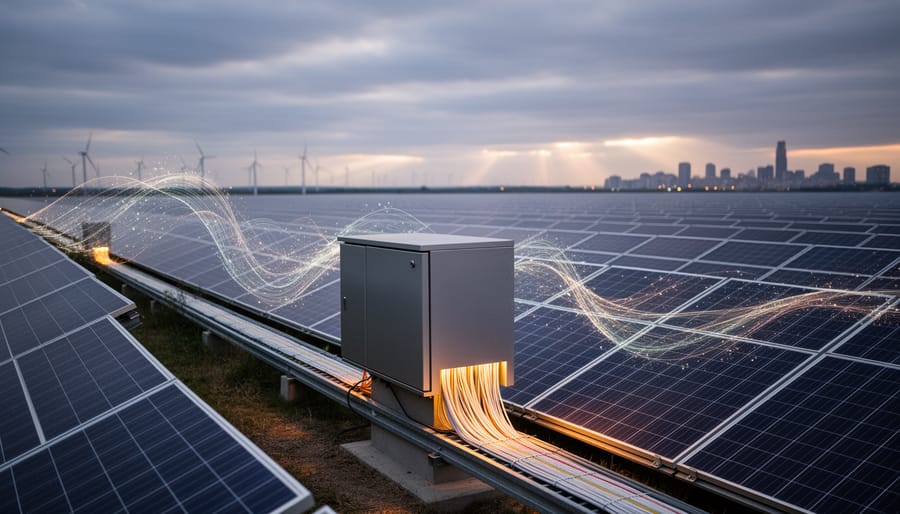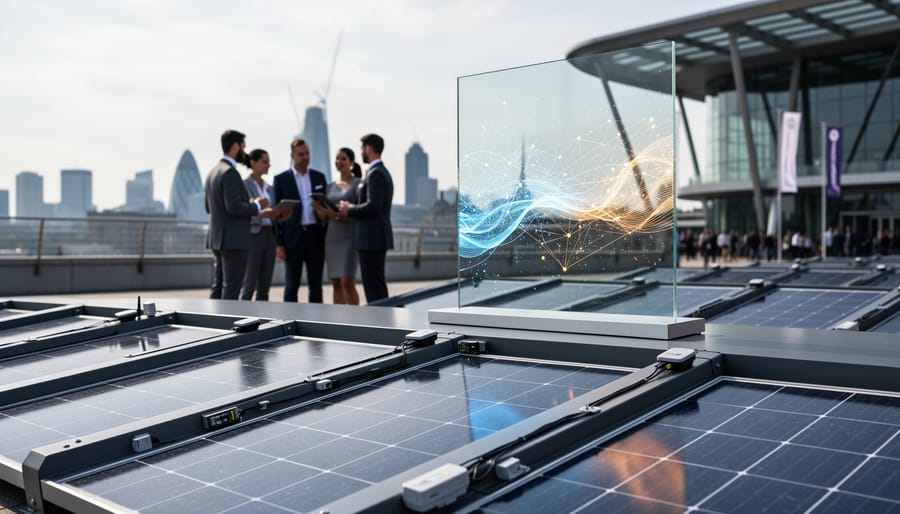
The energy sector stands at a crossroads where digital innovation meets sustainability imperatives, and nowhere is this convergence more apparent than at the UEN Tech Summit taking place in London this September. This flagship event brings together technology pioneers, energy industry leaders, and sustainability experts to explore how artificial intelligence, blockchain, IoT sensors, and advanced data analytics are reshaping how we generate, distribute, and consume renewable energy.
For solar energy professionals navigating an increasingly complex landscape of grid integration challenges, storage solutions, and efficiency optimization, the summit offers more than networking opportunities. It presents a strategic roadmap for staying competitive in an industry where technological advancement now determines market leadership. The 2026 edition arrives at a particularly crucial moment, as solar installations worldwide face mounting pressure to demonstrate not just environmental benefits but also superior performance through smart technology integration.
What sets this summit apart is its practical focus. Rather than abstract discussions about future possibilities, sessions drill down into real-world applications: how machine learning algorithms are improving solar panel performance prediction, how blockchain platforms are enabling peer-to-peer energy trading in distributed solar networks, and how predictive maintenance powered by IoT sensors is reducing operational costs by up to 30 percent.
The event recognizes that solar energy’s next phase won’t be won through panel efficiency improvements alone. Victory belongs to those who can harness digital tools to create intelligent, responsive, and economically compelling energy systems that work seamlessly within existing infrastructure while pushing boundaries of what’s possible.
What Makes Tech Summit London 2026 Essential for Solar Professionals
The solar industry’s transformation hinges less on photovoltaic chemistry today and more on the software, sensors, and systems that maximize every watt captured. Tech Summit London 2026 sits at precisely this intersection, where advances in artificial intelligence, data infrastructure, and connectivity protocols are rewriting the economics of renewable energy deployment.
For solar professionals, the summit offers direct exposure to technologies that determine whether installations achieve projected returns or fall short. Grid operators now manage thousands of distributed solar assets in real time, requiring predictive algorithms that forecast generation patterns hours ahead. Energy storage systems coordinate charging and discharging based on machine learning models that analyze weather data, electricity prices, and consumption patterns simultaneously. These aren’t theoretical applications, they’re operational requirements for modern solar projects seeking financing or grid interconnection approval.
The digital transformation reshaping energy markets creates both opportunities and challenges for solar stakeholders. Blockchain platforms are enabling peer-to-peer solar trading in residential communities, while IoT sensors provide granular performance data that reduces maintenance costs by identifying failing components before they impact output. Cloud-based analytics tools help developers identify optimal installation sites by processing satellite imagery, grid capacity data, and local electricity rates. Understanding these technologies moves from optional to essential as investors increasingly demand digital monitoring capabilities and performance guarantees backed by AI-driven forecasting.
Cross-industry pollination matters because solar’s most pressing technical challenges, integrating variable generation with grid stability, optimizing asset performance remotely, and creating transparent energy markets, mirror problems already solved in adjacent sectors. The telecommunications industry mastered distributed network management decades ago. Financial technology pioneered the secure, transparent transaction systems now underpinning energy trading platforms. Tech Summit London brings these sectors together, creating conversations that spark solutions solar-specific conferences often miss. When a grid integration specialist talks with a logistics optimization expert, they discover shared algorithms for balancing supply and demand across distributed networks.
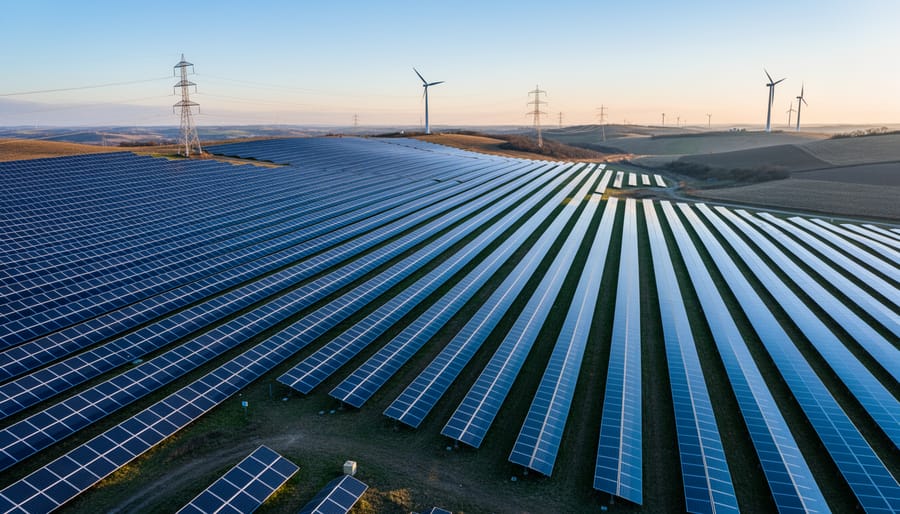
Event Essentials: Date, Access, and What to Expect
Tech Summit London 2026 takes place on December 3rd, offering solar professionals a focused, one-day intensive into the technologies reshaping energy systems. The Tech Summit London date positions the event at a strategic point in the year, when industry leaders finalize their technology strategies for 2027 and beyond.
Access comes through an All Access Pass price £545, which grants entry to the full spectrum of sessions, networking opportunities, and exhibition areas. This single-tier pricing model eliminates the tiered access structure common at larger conferences, ensuring every attendee can engage with any speaker, workshop, or demonstration that aligns with their interests.
| Detail | Information |
|---|---|
| Date | December 3, 2026 |
| Pass Type | All Access Pass |
| Price | £545 |
| Schedule Philosophy | Ignite ideas, accelerate action |
The schedule is intentionally designed to ignite ideas and accelerate action, with every hour curated to challenge norms and inspire bold thinking. This philosophy moves beyond passive conference attendance, pushing participants toward immediate application rather than theoretical discussion. For solar professionals, this means sessions that translate cutting-edge technology concepts into actionable strategies for improving system performance, reducing costs, and expanding market reach.
The summit’s focus on challenging established thinking creates space for unconventional approaches to persistent solar industry challenges, from intermittency management to financing structures. Expect a pace that rewards preparation and active engagement over note-taking.
Technology Trends Shaping Solar Energy’s Future
Artificial Intelligence and Solar Optimization
AI-driven platforms showcased at technology summits are fundamentally changing how solar installations operate. Machine learning algorithms now analyze performance data from thousands of panels in real time, automatically adjusting inverter settings to maximize energy capture under shifting weather conditions. This dynamic optimization can boost output by 15-20% compared to static configurations.
Predictive maintenance represents another breakthrough area. Instead of reactive repairs or scheduled inspections, AI systems monitor subtle performance anomalies, temperature fluctuations, and electrical signatures to predict component failures weeks before they occur. Solar operators can schedule targeted interventions during low-production periods, avoiding costly emergency repairs and extended downtime.
Energy output forecasting has evolved from basic weather prediction to sophisticated models that integrate satellite imagery, historical performance patterns, and grid demand signals. These forecasts enable solar facilities to participate more effectively in energy markets, optimizing bidding strategies and balancing supply commitments. For distributed solar networks, AI coordination platforms synchronize thousands of rooftop installations to function as virtual power plants, responding to grid needs within seconds while maximizing revenue for system owners.
Digital Infrastructure for Distributed Energy
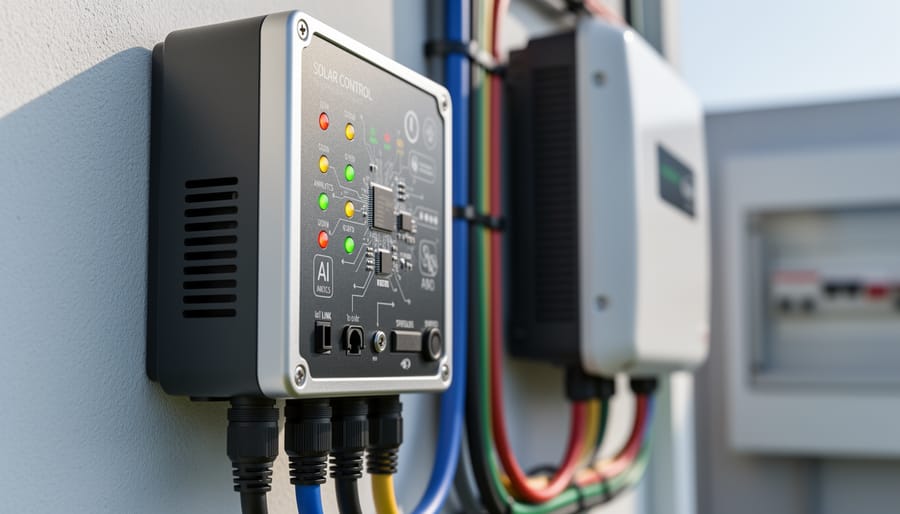
Distributed solar systems demand infrastructure that processes data where it’s generated, not just in distant data centers. Edge computing places processing power at solar installation sites, enabling microsecond responses to voltage fluctuations, shading patterns, and demand spikes without waiting for cloud round-trips. A rooftop solar array with edge devices can automatically adjust inverter settings, reroute power through battery storage, or communicate with neighboring installations to balance loads, all before grid operators even register the event.
Cloud platforms still play a crucial role, aggregating performance data from thousands of distributed sites to identify system-wide patterns, optimize energy trading strategies, and predict maintenance needs across entire solar portfolios. The real breakthrough comes from hybrid architectures: edge devices handle real-time decisions while cloud systems manage long-term analytics and coordination.
Connectivity ties this together. 5G networks and low-power wide-area networks (LPWAN) allow remote solar installations, from desert arrays to offshore platforms, to maintain constant communication with control systems. This creates what engineers call “virtual power plants,” where dispersed solar assets operate as a single coordinated entity, selling excess capacity during peak demand or storing energy when prices drop. For solar developers, understanding these infrastructure layers means designing systems that can participate in sophisticated energy markets rather than simply feeding the grid.
Data Analytics Driving Solar Investment Decisions
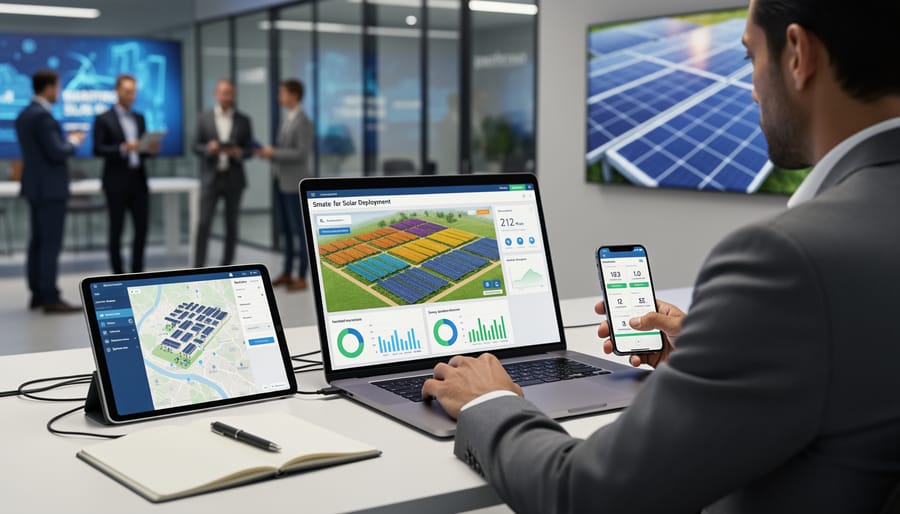
Big data platforms now model solar performance with precision that transforms investment risk assessment. Real-world irradiance data combined with weather patterns, grid pricing, and equipment degradation curves help developers forecast 25-year returns within tight confidence intervals. Financial institutions increasingly demand these analytics before committing capital, as they quantify variables like shading impacts, panel soiling rates, and optimal maintenance windows.
Advanced platforms aggregate data from thousands of installations to benchmark performance, identify underperforming assets, and spot emerging market opportunities. Investors use these tools to compare regional incentive structures, land costs, and grid interconnection timelines across markets. For utility-scale projects, analytics can shave months off site selection by filtering locations through multiple economic and technical criteria simultaneously, turning what was intuition-driven prospecting into data-backed strategy.
Why Cross-Industry Events Matter for Solar Innovation
Solar innovation rarely happens in isolation. While energy-specific conferences like ENTECH provide deep technical expertise and targeted networking, the breakthrough ideas that propel the industry forward often emerge at the intersection of different disciplines. Cross-industry technology summits create a unique environment where solar professionals encounter solutions developed for entirely different sectors, sparking connections that would never surface at traditional renewable energy gatherings.
Consider how solar energy has already borrowed from other industries: battery storage advances driven by electric vehicle development, predictive maintenance algorithms refined in manufacturing, and financing models adapted from software-as-a-service platforms. These innovations didn’t originate in solar boardrooms; they arrived through professionals who maintained connections beyond their immediate field. Technology summits accelerate this process by concentrating diverse expertise in one space, from fintech entrepreneurs revolutionizing payment systems to logistics experts optimizing supply chains.
The networking dynamic at cross-industry events fundamentally differs from sector-specific conferences. At an energy-focused gathering, you meet peers facing similar challenges. At a technology summit, you encounter someone solving a seemingly unrelated problem using a method perfectly suited to your solar deployment obstacles. A conversation with a retail analytics specialist might reveal customer behavior insights applicable to residential solar sales. A discussion with an agriculture tech developer could uncover sensor technologies ideal for solar farm monitoring. These unexpected partnerships frequently outperform planned collaborations because they bring genuinely fresh perspectives rather than incremental improvements on known approaches.
Perhaps most importantly, cross-industry events challenge the assumptions that can calcify within any specialized field. When solar professionals step outside their familiar ecosystem, they’re exposed to different problem-solving frameworks, risk assessment models, and innovation velocities. A tech startup might iterate on product development three times faster than typical solar project timelines, prompting questions about why certain processes remain slow. These external benchmarks create productive tension that drives meaningful change rather than comfortable consensus.
Maximizing Your Summit Experience as a Solar Professional
Attending Tech Summit London as a solar professional requires strategic preparation to extract maximum value from the December 3 event. Start by reviewing the schedule at least two weeks in advance to identify sessions on AI, IoT, data analytics, and digital infrastructure, these technologies directly intersect with solar energy systems and grid management.
- Map your priorities before arriving: list three specific challenges your organization faces (grid integration complexity, predictive maintenance gaps, customer acquisition costs) and seek sessions addressing these pain points.
- Research exhibitors in advance, focusing on companies offering cloud platforms, machine learning tools, sensor technologies, and blockchain solutions that could enhance solar operations.
- Prepare three targeted questions for each booth: “How does your platform handle distributed energy resource management?” “What integration options exist for existing solar monitoring systems?” “Can you share case studies from renewable energy deployments?”
- Schedule networking time strategically between sessions rather than trying to attend every talk, conversations often yield more actionable insights than presentations.
- Connect with fintech and investment technology exhibitors; these relationships can unlock new financing models for solar projects and customer acquisition strategies.
When engaging with speakers and exhibitors from non-energy backgrounds, frame your questions around specific solar applications. Instead of asking “What does your AI do?” try “How could your anomaly detection system identify underperforming solar panels across a 500-site portfolio?” This specificity helps tech innovators understand renewable energy use cases they might not have considered.
Take detailed notes on vendor capabilities and pricing models during conversations. Many breakthrough solar technologies emerged from adapting solutions initially designed for telecommunications, manufacturing, or logistics. That pattern recognition software for quality control? It might revolutionize your solar panel inspection process. The key is translating general tech capabilities into solar-specific applications that deliver measurable ROI.
The solar industry’s next breakthrough will not come from isolation. Tech Summit London on December 3, 2026 represents more than another calendar entry; it is a strategic checkpoint where digital innovation converges with energy transformation. Solar professionals who engage with these broader technology currents position themselves ahead of market shifts, regulatory changes, and emerging opportunities. The £545 All Access Pass is an investment in staying relevant as artificial intelligence, data analytics, and digital infrastructure reshape how we generate, distribute, and consume clean energy. The global solar transition depends not just on better panels or storage solutions, but on professionals who understand the digital ecosystems that will power tomorrow’s grids. This summit offers that critical perspective.