The solar energy market is experiencing unprecedented expansion, transforming from a niche alternative into a dominant force reshaping global electricity generation. In 2023, worldwide solar installations exceeded 390 gigawatts, marking a 76% increase from the previous year and solidifying solar power as the fastest-growing renewable energy source. This explosive growth trajectory shows no signs of slowing, with projections indicating the market will surpass $450 billion by 2030.
Several converging factors drive this remarkable expansion. Technological breakthroughs have slashed solar panel costs by nearly 90% over the past decade, making photovoltaic systems economically competitive with fossil fuels even without subsidies. Government policies worldwide increasingly favor renewable energy through tax incentives, renewable portfolio standards, and ambitious carbon neutrality commitments. China, the United States, and India lead installation volumes, while European nations pioneer innovative integration models and energy storage solutions.
The corporate sector accelerates adoption as major corporations commit to 100% renewable energy targets, recognizing solar installations as both environmentally responsible and financially prudent investments. Residential markets flourish simultaneously, with homeowners attracted by energy independence, reduced utility bills, and climate action opportunities.
Innovation continues revolutionizing the sector. Bifacial panels, perovskite technologies, and floating solar farms represent just glimpses of emerging possibilities. As grid infrastructure evolves and battery storage becomes increasingly affordable, solar energy transitions from supplementary power source to cornerstone of modern energy systems, fundamentally redefining how civilization generates and consumes electricity.
The Numbers Behind the Solar Boom
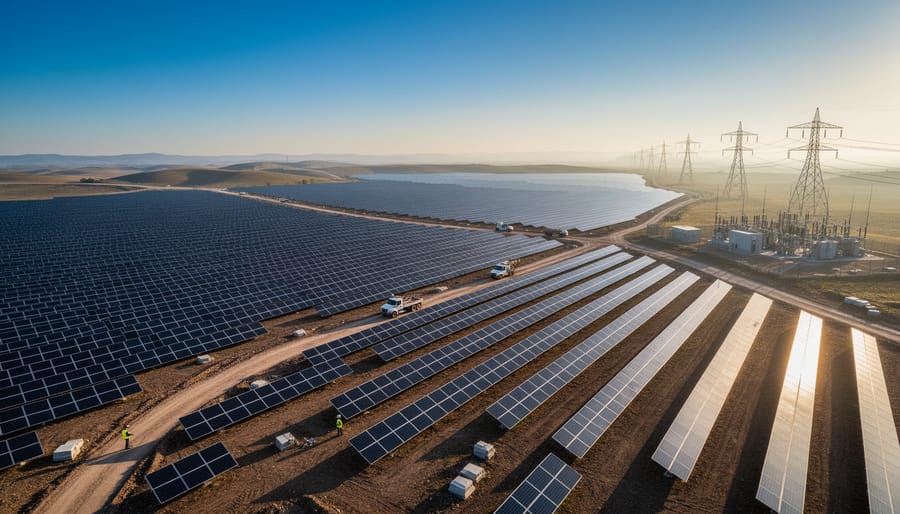
Record-Breaking Installation Rates
The solar energy sector has shattered installation records across the globe, with 2023 marking an unprecedented milestone. Global solar capacity additions reached approximately 400 gigawatts, representing a staggering 70% increase compared to the previous year. This remarkable surge reflects the convergence of declining technology costs, supportive policies, and accelerating climate commitments worldwide.
China continues to dominate installations, deploying over 200 gigawatts alone and accounting for more than half of global additions. The Asia-Pacific region collectively installed nearly 270 gigawatts, reinforcing its position as the world’s solar powerhouse. Meanwhile, Europe experienced a renaissance with installations jumping 60% year-over-year, driven by energy security concerns and ambitious renewable targets. Germany, Spain, and Poland led the European expansion.
The United States also achieved impressive growth, surpassing 30 gigawatts of new capacity for the first time, fueled by the Inflation Reduction Act’s generous incentives. Latin America and Africa, though representing smaller absolute numbers, demonstrated exceptional percentage growth rates exceeding 40% annually, signaling emerging market potential. These installation rates suggest solar energy is transitioning from alternative to mainstream power source at breathtaking speed.
Market Valuation and Investment Surge
The solar energy market has witnessed remarkable financial momentum, with global investment reaching $495 billion in 2023, representing a 43% increase from the previous year. This capital surge reflects growing investor confidence in solar technology’s economic viability and long-term returns. Major institutional investors, including pension funds and sovereign wealth funds, have significantly expanded their renewable energy portfolios, viewing solar assets as stable, inflation-hedged investments with predictable cash flows.
Market capitalization of leading solar companies has experienced double-digit growth, with the solar sector outperforming traditional energy indices. Corporate power purchase agreements have soared, with Fortune 500 companies committing to multi-gigawatt solar procurement targets. Venture capital flowing into solar innovation—particularly in perovskite cells, energy storage integration, and smart grid technologies—exceeded $12 billion globally in 2023. Bond markets have responded enthusiastically, with green bonds dedicated to solar projects reaching record issuance levels. This financial ecosystem transformation demonstrates that solar energy has evolved from an alternative investment to a mainstream asset class, attracting diverse capital sources and institutional backing that ensures sustained market expansion through the coming decade.
What’s Driving This Explosive Growth
Technology Costs Have Plummeted
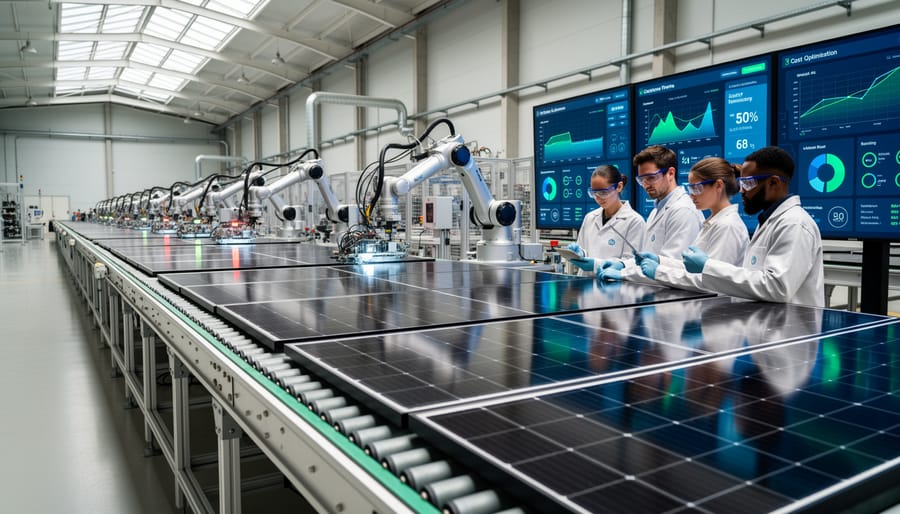
The solar industry has experienced one of the most remarkable cost transformations in energy history. Between 2010 and 2023, the price of solar photovoltaic modules plummeted by approximately 90%, making solar energy not just environmentally attractive but economically compelling. This dramatic decline stems from manufacturing innovations, economies of scale, and intense global competition, particularly from producers in China, which now manufactures over 80% of the world’s solar panels.
Today’s solar installations generate electricity at prices competitive with or lower than fossil fuels in most markets worldwide. In many regions, utility-scale solar projects produce power for under $30 per megawatt-hour, often undercutting coal and natural gas. Simultaneously, panel efficiency has improved significantly, with commercial modules now converting 20-22% of sunlight into electricity, compared to 15% a decade ago. Advanced technologies like bifacial panels and PERC cells squeeze even more energy from the same surface area.
This cost-efficiency convergence has fundamentally shifted the investment calculus. Solar energy is no longer a premium green choice requiring subsidies but a practical economic decision driving unprecedented market expansion across residential, commercial, and utility sectors globally.
Government Policies and Climate Commitments
Governments worldwide have established ambitious frameworks that fundamentally reshape solar market dynamics. The European Union’s Renewable Energy Directive mandates that member states achieve at least 42.5% renewable energy by 2030, creating predictable demand across the continent. In the United States, the Inflation Reduction Act extends tax credits for solar installations through 2032, providing long-term investment certainty while stimulating domestic manufacturing capabilities.
Asia’s commitment proves equally transformative. China’s 14th Five-Year Plan targets 1,200 GW of combined wind and solar capacity by 2030, while India’s National Solar Mission pursues 280 GW of solar capacity within the same timeframe. Japan and South Korea have reinforced net-zero pledges with feed-in tariffs and auction mechanisms that guarantee stable returns for solar developers.
These policies translate beyond targets into actionable market mechanisms. Carbon pricing initiatives in over 40 jurisdictions create economic advantages for solar versus fossil fuels. Streamlined permitting processes, grid connection guarantees, and renewable portfolio standards remove traditional barriers to deployment. Such coordinated policy frameworks don’t just encourage solar adoption—they establish regulatory certainty that attracts capital, accelerates innovation, and transforms solar from alternative energy into mainstream infrastructure.
Corporate and Consumer Demand
The solar energy market is experiencing unprecedented growth driven by a powerful convergence of corporate sustainability commitments and consumer demand for cleaner, more affordable energy solutions. Global corporations across industries—from technology giants to manufacturing firms—are increasingly adopting solar installations to meet ambitious net-zero targets and enhance their environmental credentials. Companies recognize that investing in renewable energy not only reduces operational costs but also strengthens brand reputation among environmentally conscious stakeholders and customers.
On the consumer front, residential solar adoption continues accelerating as homeowners seek energy independence and protection against volatile utility rates. The financial proposition has become increasingly compelling, with solar installations offering substantial long-term savings and impressive return on investment. Rising electricity prices in many regions have made solar power an attractive hedge against future cost increases, while declining equipment costs have lowered barriers to entry.
This dual demand from both sectors creates a robust, diversified market foundation. Businesses benefit from economies of scale with large-scale installations, while residential customers drive innovation in financing models, battery storage integration, and smart energy management systems. Together, corporate and consumer markets are propelling solar energy from alternative option to mainstream energy solution, fundamentally reshaping how we power our world.
Regional Powerhouses Leading the Charge
Asia’s Dominance in Manufacturing and Installation
Asia has emerged as the undisputed powerhouse in solar energy, commanding both manufacturing prowess and deployment leadership. China alone produces over 80% of the world’s solar panels and dominates the entire supply chain, from polysilicon production to module assembly. This manufacturing supremacy has driven down global solar costs by more than 90% over the past decade, making renewable energy accessible worldwide.
India represents one of the most compelling growth stories, with solar capacity expanding from just 2.6 GW in 2014 to over 70 GW today. The nation’s ambitious target of 500 GW renewable capacity by 2030 reflects its commitment to energy transition while addressing growing electricity demand. Vietnam and Thailand have similarly accelerated installations, with Vietnam adding gigawatts of capacity in record time through favorable feed-in tariffs.
Japan continues advancing solar technology innovation despite limited land availability, pioneering floating solar installations and building-integrated photovoltaics. South Korea’s Green New Deal has positioned solar as central to economic recovery and decarbonization efforts. This regional dynamism showcases how diverse Asian markets are reshaping the global solar landscape through both scale and innovation.
North America’s Residential and Utility-Scale Expansion
North America continues to lead as a powerhouse in solar energy expansion, with the United States driving remarkable growth across both residential and utility-scale segments. The residential sector has experienced unprecedented momentum, fueled by declining installation costs, attractive federal tax incentives, and homeowners seeking cost savings on electricity bills. Distributed generation systems now account for a significant portion of new capacity additions, with rooftop installations becoming increasingly common in sun-rich states like California, Texas, and Florida.
Meanwhile, utility-scale solar farms are transforming America’s energy landscape. Massive projects spanning thousands of acres are coming online, delivering clean electricity to millions of homes while creating jobs in rural communities. Texas has emerged as an unexpected solar leader, with its vast open spaces and favorable economics attracting billions in investment. These large-scale installations benefit from advanced tracking systems and economies of scale, driving down costs to compete directly with fossil fuels. As battery storage technology integrates seamlessly with these facilities, solar power is transitioning from an intermittent resource to a reliable baseload energy source.
Europe’s Energy Independence Push
Europe’s push toward energy independence has become a defining force in the continent’s solar revolution. Following geopolitical tensions that exposed vulnerabilities in fossil fuel supply chains, European nations have dramatically accelerated renewable energy deployment. The European Union’s REPowerEU plan aims to install over 320 GW of solar capacity by 2025, nearly doubling previous targets. Germany leads this charge, adding record capacity in 2023, while Spain, Poland, and the Netherlands follow with ambitious installations. This urgency stems from dual motivations: reducing dependence on imported energy while meeting aggressive climate neutrality goals by 2050. The crisis transformed solar from an environmental preference into a strategic necessity, unlocking unprecedented investment and streamlined permitting processes. Countries are incentivizing rooftop installations, utility-scale projects, and innovative agrivoltaics solutions simultaneously. This comprehensive approach positions Europe as a testing ground for rapid energy transition models, demonstrating how security concerns can catalyze climate action. The continent’s experience offers valuable lessons for other regions navigating similar challenges between energy sovereignty and environmental responsibility.
Innovation Fueling Market Expansion
Next-Generation Solar Technologies
The solar industry’s innovation pipeline promises to reshape energy generation over the coming decade. Perovskite solar cells represent perhaps the most exciting breakthrough, achieving laboratory efficiencies exceeding 25% while offering dramatically lower manufacturing costs than traditional silicon. These materials can be printed onto flexible substrates, opening possibilities for building-integrated photovoltaics and portable applications previously impractical with rigid panels.
Bifacial solar panels are already making commercial headway, capturing sunlight from both sides to boost energy generation by 10-30% depending on installation conditions. By harnessing reflected light from ground surfaces, these panels maximize output without requiring additional land, making them particularly valuable in space-constrained markets.
Floating solar installations, or floatovoltaics, are gaining momentum across Asia and beyond. These systems preserve valuable land resources while benefiting from the cooling effect of water, which enhances panel efficiency. Countries like Singapore and the Netherlands are pioneering large-scale floating arrays on reservoirs and coastal waters.
Additional innovations include tandem solar cells combining multiple materials to capture broader light spectrums, advanced tracking systems using artificial intelligence to optimize panel positioning, and integrated energy storage solutions that address intermittency challenges. Meanwhile, transparent solar panels under development could transform windows into power generators, revolutionizing urban energy infrastructure. These technologies collectively position solar energy to capture increasingly larger market share while reducing costs and expanding deployment versatility across diverse environments and applications.
Energy Storage Integration
Battery technology has emerged as the critical enabler transforming solar energy from an intermittent resource into a reliable, round-the-clock power solution. Modern lithium-ion and next-generation solid-state batteries are addressing the fundamental challenge of solar energy—the sun doesn’t always shine—by storing excess daytime generation for evening and nighttime use.
This integration is creating entirely new market segments. Utility-scale battery installations paired with solar farms now allow grid operators to dispatch clean energy on demand, competing directly with fossil fuel peaker plants. In residential markets, homeowners installing residential solar systems increasingly opt for battery backup, driven by energy independence goals and protection against grid outages. The global solar-plus-storage market reached $5.1 billion in 2024 and is projected to exceed $15 billion by 2030.
Innovation continues accelerating across multiple fronts. Flow batteries offer longer duration storage for commercial applications, while artificial intelligence optimizes charge-discharge cycles to maximize economic returns. In Germany and California, virtual power plants aggregate thousands of home batteries, creating flexible grid resources that enhance system reliability. Meanwhile, declining battery costs—down 89 percent since 2010—are making storage economically viable in emerging markets across Africa and Southeast Asia, where solar-plus-storage microgrids are leapfrogging traditional grid infrastructure entirely.

Challenges That Could Shape Future Growth
Despite remarkable momentum, the solar energy market navigates several interconnected challenges that will influence its trajectory over the coming years. Understanding these obstacles provides crucial context for realistic growth projections and investment decisions.
Supply chain complexities present ongoing considerations for the industry. The concentration of solar manufacturing in specific regions creates vulnerability to disruptions, as witnessed during recent global events. Polysilicon production, wafer manufacturing, and component logistics require diversification strategies that balance efficiency with resilience. Industry leaders are responding by expanding manufacturing footprints across multiple continents, though this transition demands significant capital investment and time.
Grid integration emerges as another critical focus area. As solar generation increases, electrical grids designed for centralized power distribution must evolve to accommodate distributed, intermittent renewable sources. This transformation requires substantial infrastructure upgrades, advanced energy storage solutions, and sophisticated management systems that can balance supply fluctuations with demand patterns. Utilities and grid operators worldwide are pioneering innovative approaches, from virtual power plants to artificial intelligence-driven forecasting systems.
Policy frameworks present additional uncertainty across various markets. While many governments have established ambitious renewable energy targets, implementation mechanisms vary considerably. Regulatory changes, subsidy adjustments, and permitting processes can significantly impact project timelines and financial viability. The industry benefits when policy environments provide long-term visibility, enabling stakeholders to make confident investment decisions.
Labor and skills development also warrant attention as rapid market expansion creates demand for trained professionals across installation, maintenance, engineering, and project management roles. Educational institutions and industry associations are collaborating to build robust training pipelines, yet matching workforce growth with market expansion remains an ongoing priority. These challenges, while substantial, are increasingly recognized as solvable through coordinated innovation and strategic planning.
What the Next Five Years Hold
The solar energy market stands at an inflection point, with projections suggesting unprecedented expansion through 2029. Industry analysts forecast the global solar market will surpass 500 gigawatts of annual installations by 2028, representing nearly triple the capacity added in 2023. This trajectory reflects not merely incremental growth but a fundamental restructuring of global energy systems.
Perovskite solar cells emerge as a potential game-changer, promising efficiency rates exceeding 30 percent while dramatically reducing manufacturing costs. Several companies are moving from laboratory success to commercial-scale production, with market entry anticipated within the next two years. This technology could democratize solar access in developing markets where cost barriers remain significant.
Energy storage integration will define competitive advantage in the coming half-decade. As battery costs continue their downward trend, solar-plus-storage systems will become standard rather than exceptional, transforming solar from an intermittent resource into dispatchable baseload power. This convergence addresses the primary technical limitation that has historically constrained solar deployment.
Floating solar installations represent another frontier gaining momentum, particularly in land-constrained regions across Asia and Europe. These systems utilize reservoirs, lakes, and coastal waters while delivering superior performance through natural cooling effects. Market forecasts suggest floating solar capacity could reach 10 gigawatts globally by 2028.
The next five years will witness artificial intelligence revolutionizing system optimization, predictive maintenance, and grid integration. Machine learning algorithms will maximize energy harvest while extending equipment lifespan, improving project economics substantially. Meanwhile, building-integrated photovoltaics will blur the line between construction materials and energy generation, opening vast untapped market segments.
Policy environments will evolve beyond subsidies toward market mechanisms that value solar’s contributions to grid resilience and emissions reduction. This maturation signals solar’s transition from alternative energy to energy mainstream. For industry stakeholders and enthusiasts alike, the next chapter promises innovation velocity that will reshape how humanity powers civilization.
The solar energy market stands at a pivotal moment in human history, transforming from an alternative energy source into a cornerstone of global power generation. As we’ve explored throughout this analysis, the confluence of declining costs, technological breakthroughs, supportive policies, and growing environmental awareness has created unprecedented momentum for solar expansion across every inhabited continent.
From the ambitious installations across Asia-Pacific to Europe’s renewable energy leadership and North America’s accelerating adoption, the data demonstrates an irreversible shift toward clean energy infrastructure. The innovations driving this growth extend far beyond panel efficiency improvements, encompassing energy storage solutions, smart grid integration, and increasingly sophisticated solar energy solutions that meet diverse consumer and industrial needs.
For industry professionals, this expansion represents abundant opportunities in manufacturing, installation, financing, and technology development. For enthusiasts and environmentally conscious individuals, it signals tangible progress toward climate goals and energy independence. The trajectory is clear: solar energy will continue capturing greater market share, driving economic growth while reducing carbon emissions.
As we look ahead, the solar revolution invites each of us to participate whether through adoption, advocacy, or innovation. The transformation is underway, powered by sunlight and human ingenuity, illuminating a path toward a sustainable, resilient energy future for generations to come.