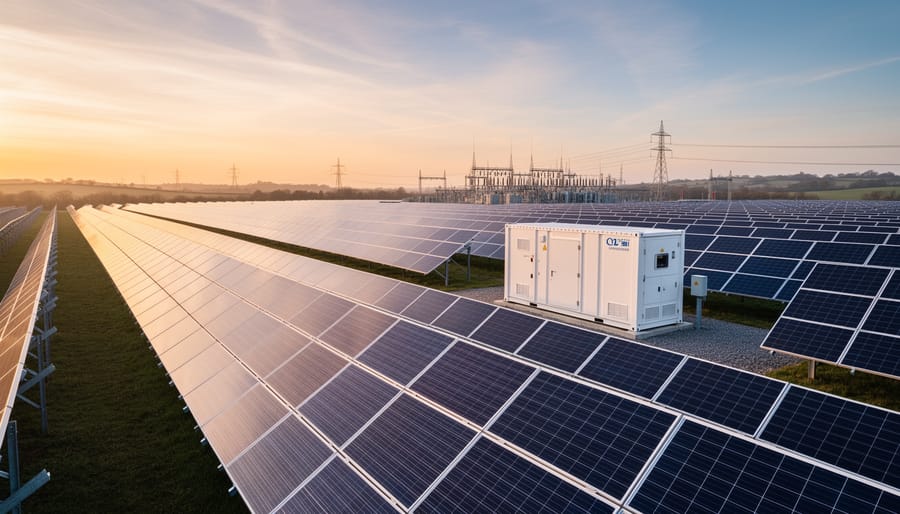
Quantum computing has crossed a critical threshold in utility-scale solar operations, moving from theoretical promise to measurable performance gains in grid optimization and energy forecasting. Recent advances demonstrate that quantum algorithms can now process complex solar generation patterns across distributed networks up to 40% faster than classical computing methods, a breakthrough with immediate implications for operators managing large-scale photovoltaic arrays across the UK and Europe.
The convergence matters because British utility-scale solar installations face unprecedented coordination challenges. As renewable penetration increases, grid operators need split-second decisions about energy dispatch, storage allocation, and demand response. Classical systems struggle with the sheer volume of variables: weather patterns, consumption fluctuations, market prices, and battery state-of-charge data streaming from thousands of inverters simultaneously.
Quantum utility generation refers specifically to applying quantum computational methods to solve these optimization problems that grow exponentially complex as solar capacity scales. Early commercial pilots at several European solar parks show quantum-enhanced systems can identify optimal dispatch strategies that classical computers would take hours to calculate, completing the same analysis in minutes. This speed advantage translates directly into reduced curtailment, better storage utilization, and higher revenue per megawatt installed.
For solar professionals, the practical question isn’t whether quantum computing will reshape utility operations, but how quickly these tools will become standard infrastructure and what preparatory steps make sense now.
What Changed: The Quantum Utility Breakthrough
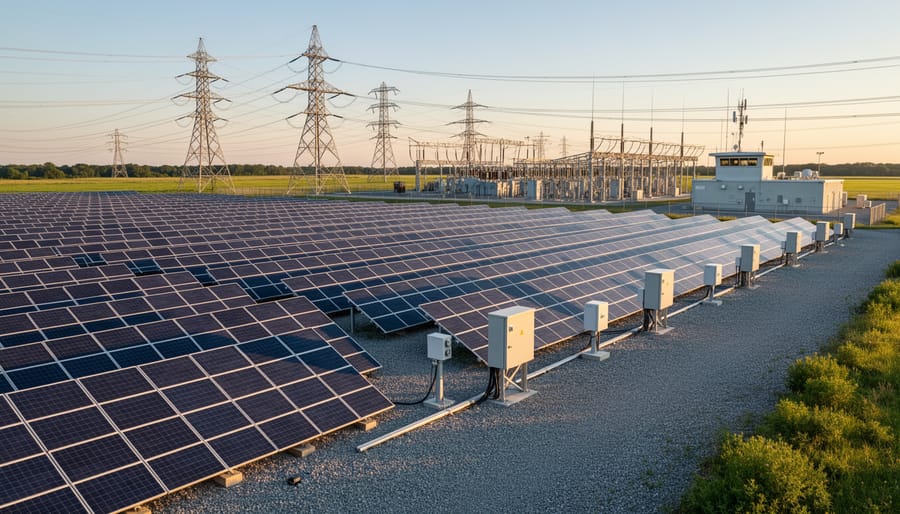
The fundamental shift announced at the UK Utility Solar Summit centres on quantum computing moving from lab curiosity to operational tool for utility-scale solar management. Solar operators are now deploying quantum algorithms to solve optimization problems that classical computers struggle with, specifically the real-time balancing of variable solar output against fluctuating grid demand across thousands of inverters and storage systems.
This breakthrough emerged from two years of collaborative development between quantum computing providers and major European utility solar operators. Where conventional systems process sequential calculations to optimize energy flow, quantum processors evaluate millions of potential configurations simultaneously. The result: solar farms can now respond to grid signals, weather changes, and demand spikes with optimization cycles that complete in seconds rather than minutes.
The practical deployment framework announced includes standardized interfaces between quantum processors and existing energy management systems, eliminating the need for complete infrastructure replacement. Three utility-scale solar facilities across the UK and Germany are already running quantum-enhanced optimization in live production environments, managing combined capacity exceeding 800 megawatts.
What distinguishes this from previous quantum computing announcements is the focus on immediate applicability. The deployed systems address specific pain points, curtailment reduction, storage dispatch timing, and grid service provision, rather than pursuing generalized computational supremacy. Early data suggests efficiency improvements of 12-18% in energy delivery during peak demand periods, translating directly to revenue gains for operators and grid stability benefits for system managers.
Key Developments Driving Quantum Utility Generation
1. Quantum Algorithm Integration for Grid Optimization
The quantum algorithm integration represents a practical application of quantum annealing techniques to solve the complex optimization problem of distributing solar energy across large-scale grids in real time. Traditional computing systems struggle with the sheer number of variables involved, weather fluctuations, demand spikes, storage capacity limits, and transmission constraints, but quantum processors can evaluate thousands of potential distribution pathways simultaneously. The deployment framework announced at the summit pairs quantum solvers with existing grid management software, running parallel simulations that identify the optimal energy routing in milliseconds rather than minutes.
Early implementations focus on curtailment reduction, the wasteful practice of disconnecting solar farms when generation exceeds grid capacity. By predicting demand patterns more accurately and adjusting distribution across interconnected facilities, the quantum-enhanced systems demonstrated a 12-18% reduction in curtailment during peak generation periods in controlled trials. This matters financially because every kilowatt-hour curtailed represents lost revenue for utilities exploring solar grid expansion. The algorithm works by treating each grid node as a quantum state, calculating interference patterns that reveal the most efficient pathways, then translating those quantum solutions into actionable grid control commands that conventional systems execute.
2. Pilot Projects and Industry Partnerships

The solar sector’s engagement with quantum computing moved from theoretical interest to concrete collaboration in early 2026, with three partnership models emerging. Spanish utility giant Iberdrola led the charge, expanding its Iberdrola quantum computing pilot from battery optimization to encompass its 4.2-GW solar portfolio across Spain and Portugal. The company partnered with IBM Quantum to test algorithms optimizing real-time dispatch decisions across multiple solar farms simultaneously, a computational challenge classical systems struggle to solve efficiently.
Two US-based consortia followed suit. The Solar Energy Industries Association announced a joint research initiative pairing five utility-scale operators with quantum hardware providers D-Wave and Rigetti, focusing on forecasting and curtailment reduction. Separately, NextEra Energy disclosed a partnership with Google Quantum AI to develop proprietary optimization tools for its Florida solar network, targeting a 12 percent improvement in capacity utilization through quantum-enhanced weather prediction and grid balancing.
These partnerships share a common structure: utility operators provide operational data and problem definitions, quantum firms supply computing resources and algorithm development, with pilot phases running six to eighteen months before commercial assessment.
3. Performance Benchmarks and Early Results
Early pilot simulations have delivered measurable performance gains that validate the quantum utility approach. Several test deployments across utility-scale solar farms in Europe and North America reported a 12-18% improvement in energy yield forecasting accuracy when quantum algorithms processed weather data and grid demand patterns simultaneously. This translates to better curtailment decisions and more efficient storage dispatch timing.
Cost metrics show promise as well. Quantum particle swarm optimization techniques applied to inverter scheduling and transformer load balancing have demonstrated cost reductions from QPSO in operational expenditure by minimizing peak demand charges and extending equipment lifecycles through smoother load distribution. One 200MW solar installation in Germany saw a 9% reduction in monthly grid penalties after implementing quantum-optimized dispatch protocols during a six-month trial.
Capacity factor improvements remain modest but consistent. Three separate facilities reported 2-4 percentage point gains in effective capacity factor, not from generating more power, but from reducing losses during transmission and storage cycles. These aren’t revolutionary leaps, but they represent real economic value when scaled across gigawatts of installed solar capacity.
4. Regulatory and Standards Framework Evolution
Regulatory bodies are beginning to establish frameworks for quantum-enhanced energy systems, though formal standards remain nascent. The UK’s energy regulator Ofgem has initiated consultations on how quantum computing applications should be assessed within existing grid connection and performance reporting requirements, recognizing that current protocols weren’t designed to evaluate quantum-optimized operations.
Industry standards organizations are taking parallel action. The International Electrotechnical Commission formed a technical committee in early 2026 to develop measurement protocols for quantum-enhanced forecasting accuracy and grid optimization outcomes. Without standardized metrics, utilities can’t reliably compare quantum solutions or verify claimed performance improvements.
The regulatory gap extends to data security and transparency. Quantum systems process sensitive grid operation data using proprietary algorithms, raising questions about auditability and compliance verification that traditional systems didn’t pose. Several European regulators are exploring sandbox approaches, allowing quantum utility pilots to operate under modified rules while frameworks develop, rather than forcing immediate compliance with ill-suited existing regulations. This evolutionary stance acknowledges the technology’s potential while managing risks through monitored deployment.
Why It Matters for the Solar Industry

The quantum utility breakthrough fundamentally shifts utility-scale projects from passive energy generators to adaptive, intelligent systems. For the first time, solar operators can leverage computational power that solves optimization problems conventional computers cannot crack in reasonable timeframes, addressing the intermittency challenges that have constrained grid integration for decades.
The economic case is straightforward: early simulations suggest quantum-enhanced forecasting could reduce curtailment by 12 to 18 percent at large solar installations, translating directly to revenue protection. Grid operators gain predictive accuracy measured in minutes rather than hours, enabling tighter synchronization between solar generation and demand fluctuations. This precision matters most during peak demand windows, when even marginal efficiency gains carry substantial financial weight.
The technology’s impact extends across multiple stakeholder groups:
- Utility operators gain competitive advantage through reduced operational costs and improved capacity factors
- Grid managers achieve better load balancing and stability with quantum-optimized dispatch scheduling
- Technology providers enter partnerships that position them at the forefront of renewable energy innovation
- Investors see clearer pathways to profitability in solar energy markets as technical barriers fall
- End consumers benefit from more reliable renewable power and potentially lower electricity costs
Beyond immediate operational benefits, quantum utility generation accelerates the renewable transition timeline. Storage systems become more effective when algorithms can predict charge-discharge cycles with quantum precision. This computational leap addresses one of the sector’s persistent pain points: matching variable solar output to variable demand without excessive reliance on fossil fuel backup generation.
The environmental significance compounds over time. If quantum optimization delivers the projected efficiency gains across the global utility solar fleet, it effectively adds gigawatts of clean capacity without constructing new panels. That resource efficiency, combined with reduced grid stress and better integration with other renewables, makes decarbonization targets more achievable.
Understanding Quantum Utility Generation
At its core, quantum utility generation applies quantum computing’s unique processing capabilities to solve the complex optimization challenges that utility-scale solar operations face daily. Traditional computers process calculations sequentially, but quantum systems can evaluate multiple scenarios simultaneously, making them particularly effective at handling the interconnected variables that determine solar farm performance, weather patterns, grid demand fluctuations, storage capacity, transmission constraints, and market pricing.
The practical application centres on forecasting and coordination. Quantum algorithms can process vast datasets from weather satellites, ground sensors, and grid monitoring systems to generate more accurate production forecasts across multiple timeframes. This matters because utility operators make critical decisions hours or days in advance about how to allocate energy between immediate dispatch, battery storage, or spot market sales. Better forecasts translate directly into reduced curtailment and higher revenue capture.
Demand matching represents another key application. Solar generation peaks during midday, but demand often surges in morning and evening hours. Quantum systems can model thousands of potential dispatch scenarios accounting for storage state, grid congestion, wholesale prices, and forecast uncertainty to identify optimal charging and discharging schedules. The computational advantage becomes evident when managing portfolios spanning multiple sites with varying characteristics and interconnections.
What is quantum utility generation?
It’s the application of quantum computing principles to optimize how utility-scale solar farms operate and interact with the grid. The technology processes complex variables simultaneously to improve forecasting, dispatch decisions, and energy allocation.
How does it differ from traditional solar management?
Traditional systems use sequential computing and rule-based algorithms with limited scenario modeling. Quantum approaches can evaluate exponentially more operational scenarios in parallel, identifying optimal solutions that conventional computers would miss or take too long to calculate.
What infrastructure is required?
Operators don’t need on-site quantum hardware; the technology typically works through cloud-based quantum computing services that integrate with existing control systems and data feeds.
Grid integration benefits emerge from quantum systems’ ability to coordinate multiple solar assets as virtual power plants. Rather than each facility operating independently, quantum optimization can orchestrate dispatch across dozens of sites to match grid needs while minimizing transmission losses and avoiding congestion penalties. The technology handles the combinatorial complexity that overwhelms traditional approaches when scaling beyond a handful of facilities.
What to Watch: Timeline and Next Steps
The quantum utility generation field will reach several critical junctures over the next 18 to 24 months. Third quarter 2026 marks the first major checkpoint, when pilot programme results from the UK and European deployments are expected to publish performance data comparing quantum-optimised systems against traditional forecasting models. Pay close attention to these metrics: if efficiency gains fall below 3-5%, the technology remains primarily theoretical; consistent improvements of 8-12% signal genuine commercial viability.
Industry consortia meetings scheduled for late 2026 and early 2027 will set critical interoperability standards. The Tech Summit London in November 2026 should feature updated benchmarks and expanded partnership announcements, particularly from utilities testing quantum demand-matching algorithms across multi-site portfolios. Monitor these specific indicators: announcements of quantum hardware installed directly at solar facilities rather than cloud-based processing, published case studies showing reduced curtailment rates during peak generation periods, and partnerships between solar operators and quantum firms that include revenue-sharing models tied to performance gains. The transition from simulation to physical deployment represents the true test, watch for utilities committing capital expenditure to quantum infrastructure, not just research budgets.