A solar powered electric vehicle charging station is a charging point that draws some or all of its electricity from solar panels, either directly or through a battery that stores the sun’s output for later. Park a car, plug in, and the energy filling the battery started as sunlight hitting a panel nearby or feeding the grid elsewhere.
The idea matters because transport and power generation have long been separate conversations. Pairing them closes a loop. An EV is only as clean as the electricity behind it, and solar gives drivers a way to cut charging emissions at the source while easing pressure on local grids during peak daytime demand. That logic is playing out worldwide, from carport arrays in California car parks to roadside hubs across Europe and fast-growing networks in Asia and the Pacific, all riding the momentum of expanding solar energy markets.
This article explains how these stations work, what components sit behind the plug, the main forms they take, and where they’re already serving drivers, fleets, and communities. If you want a clear picture of how sunlight becomes miles, start here.
What a Solar Powered EV Charging Station Means
A solar powered EV charging station is any charging point whose electricity comes at least partly from solar panels. That sounds simple, but “solar powered” covers a few different setups, and the label is worth pinning down.
At one end are stations wired directly to on-site panels, sometimes with a battery in between. The sun is the primary source, and the charger draws from whatever the array and battery can supply. At the other end are grid-connected stations that pull power from the utility but are paired with solar generation, either on the same site or elsewhere, so the energy they use is matched or offset by solar output over time. Both count, though they behave quite differently in practice.
It’s also worth clearing up a common misconception. The car isn’t charged by sunlight in real time, as if the panels were beaming power into the battery. Solar energy is converted to electricity first, then delivered through a charger, often with the grid or storage smoothing out the gaps when clouds roll in or night falls.
Why does this pairing matter? Charging with solar-generated electricity can lower the emissions tied to every mile driven. Generating power close to where it’s used also eases pressure on local grids, especially during busy daytime hours. And it shortens the distance between where energy is made and where it’s consumed, which makes the whole system easier to understand and manage.
Understanding that distinction sets the stage for how these systems actually move energy from panel to plug.
How Sunlight Becomes Miles: The Charging Process Explained
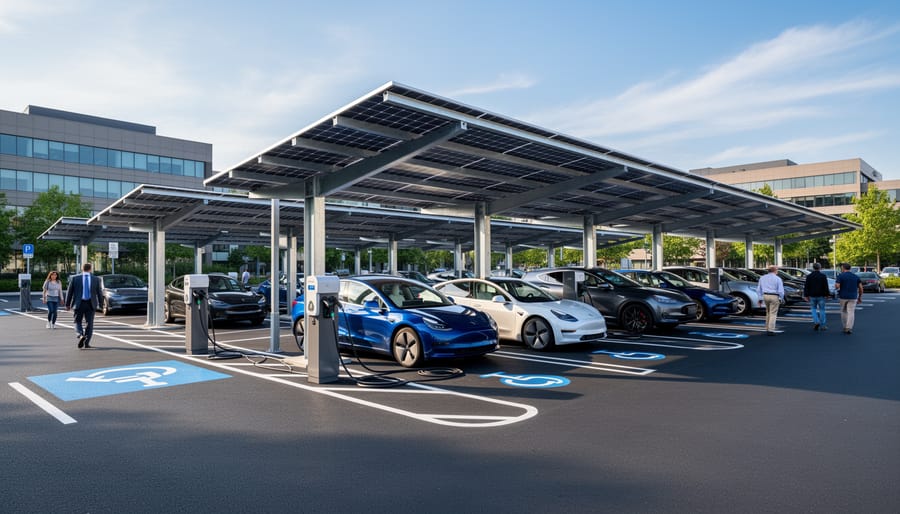
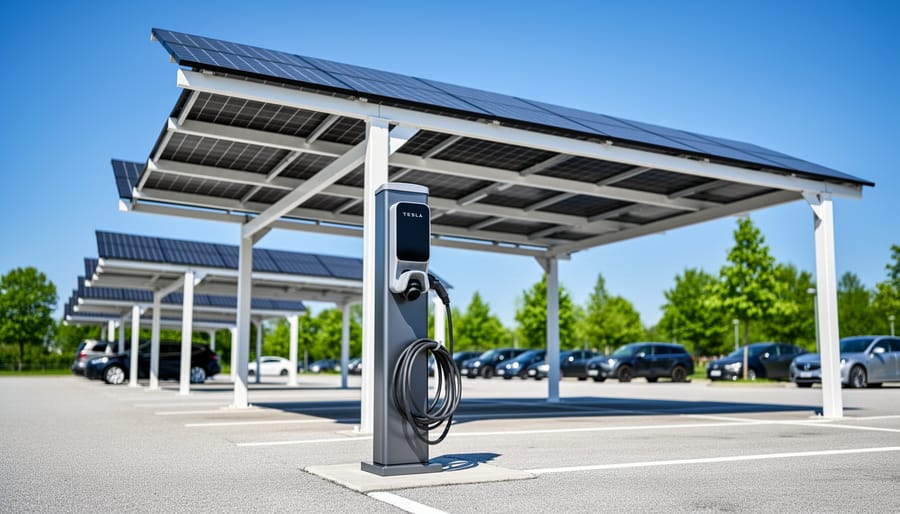
Picture a clear morning at a parking lot with a solar canopy overhead. As the sun rises, photovoltaic panels absorb sunlight and turn it into direct current (DC) electricity. That is where the journey from sunlight to miles begins.
Next comes conversion. Most chargers on the market run on alternating current (AC), so an inverter steps in to convert the panels’ DC output. Some systems skip part of this step. In a DC-coupled design, solar power flows straight to DC fast chargers or into a battery, which trims conversion losses and simplifies the hardware. Which approach makes sense depends on the charger type and the site.
What happens to the power the panels produce when no car is plugged in? That’s where optional battery storage earns its place. Surplus energy gets held in the battery instead of going to waste or flowing out to the grid. When a driver arrives in the evening, the stored energy can flow to the charger, extending solar’s usefulness well past sunset.
Finally, the charger itself manages the handoff to the vehicle. It communicates with the car, checks its battery state, and delivers power at a safe, appropriate rate. The driver sees a simple plug-in experience, with no hint of the coordination happening behind the scenes.
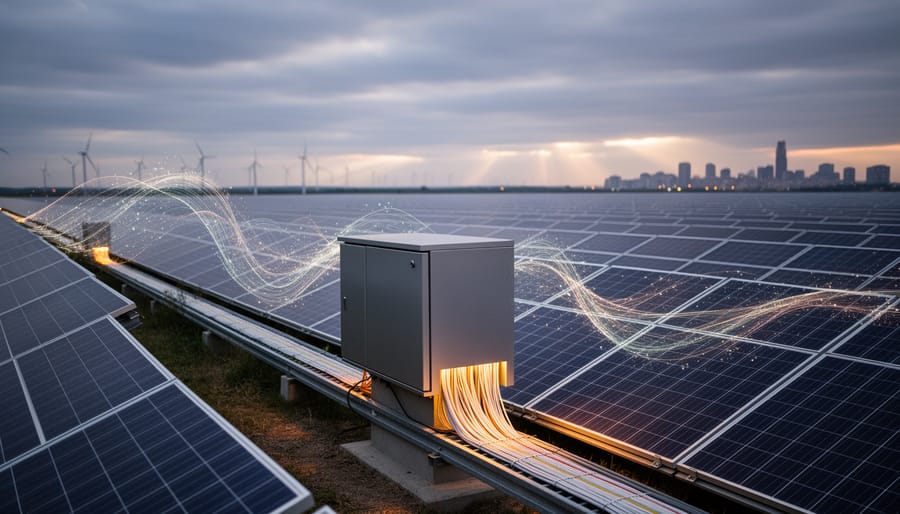
Of course, the sun doesn’t work on demand. Clouds roll in, nights arrive, and charging demand rarely lines up neatly with solar output. This is where grid connection and energy management software do the quiet balancing work. The software watches panel production, battery levels, and charging requests in real time, then decides where each kilowatt should come from. When solar is abundant, the system favors it. When it dips, the station can draw from stored energy or from the grid to keep charging uninterrupted.
Smart charging adds another layer. By shifting charging sessions toward sunnier hours, or slowing the rate during peak grid demand, a station can make better use of clean energy while easing strain on local infrastructure. The result is a system that adapts to conditions instead of depending on perfect weather.
Key Components Inside the System
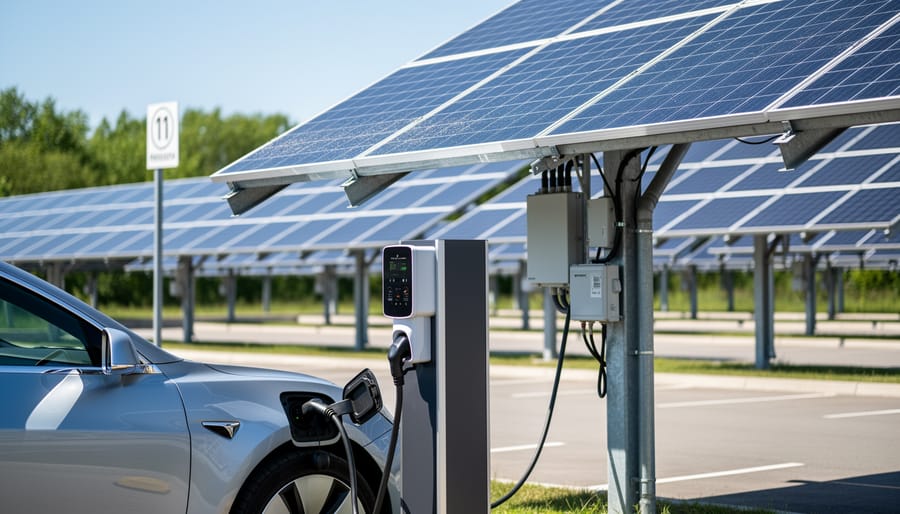
A solar powered charging station is really a small power plant paired with a smart outlet. Each part has a specific job, and together they move energy from sunlight to your battery pack.
- Solar panels (PV modules)
- These capture sunlight and convert it into direct current (DC) electricity. They can sit on a canopy, a rooftop, or a ground-mounted array.
- Inverter
- It converts DC power from the panels into the alternating current (AC) that most chargers and grids use. Some systems skip this step with DC-coupled designs.
- Battery energy storage system
- This holds surplus solar energy so the station can keep charging vehicles after sunset or during demand peaks.
- EVSE (charger)
- Short for electric vehicle supply equipment, this is the connector and control unit that safely delivers power to the car.
- Energy management system
- This software decides, moment by moment, whether power flows from the panels, the battery, or the grid.
- Grid interconnection
- It’s the utility connection that backs up the station when solar output dips and lets excess energy flow out where permitted.
A few smaller pieces tie everything together. Charge controllers regulate how batteries fill, protecting them from overcharging. Metering tracks what’s generated, stored, and delivered, which matters for billing and for any incentive programs. Mounting structures and wiring complete the physical build.
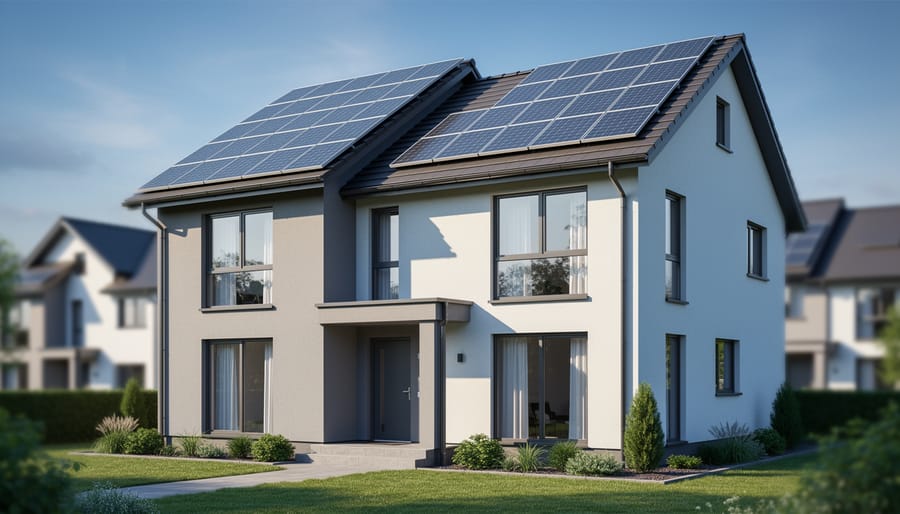
The panel type can vary with the site. Most stations use conventional modules, though architecturally sensitive locations sometimes explore building-integrated options such as photovoltaic shingles on a roof that feeds a home charging setup.
How these parts are sized and combined shapes the station’s cost, independence, and performance, which leads directly into the different setups in use today.
Types of Solar Charging Setups
Grid-Tied Stations with Solar Offset
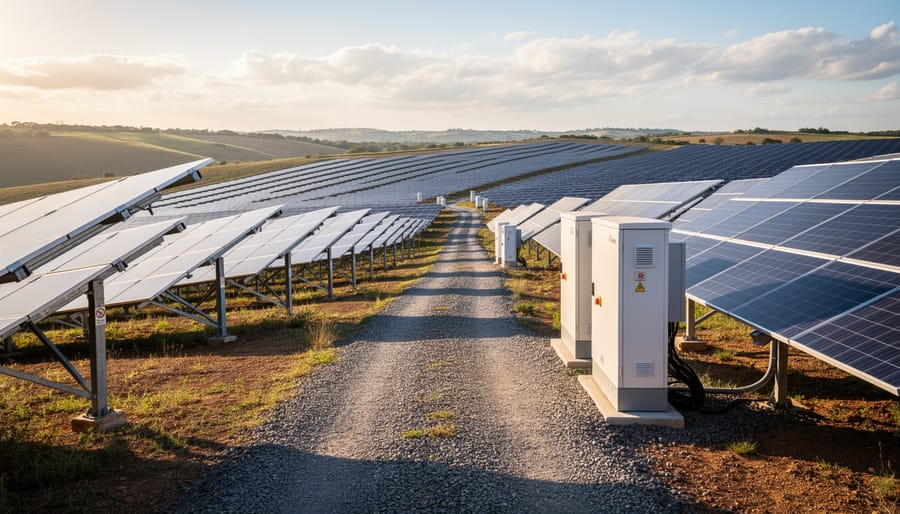
Grid-tied stations are the most common setup, and for good reason. The solar array feeds the site’s electrical system, and any surplus flows back to the grid. When an EV plugs in, the charger draws from whichever source is available: solar power during sunny hours, utility power when production dips or demand spikes.
That flexibility makes reliability a built-in strength. Drivers get a full charge whether it’s noon or midnight, and operators never worry about running short. These systems also scale easily, from a handful of chargers to dozens across a large lot.
You’ll typically find this model at commercial sites, workplaces, and parking facilities. Over time, the solar generation offsets much of the electricity those chargers consume, trimming both energy costs and carbon impact.
Solar Plus Storage Stations
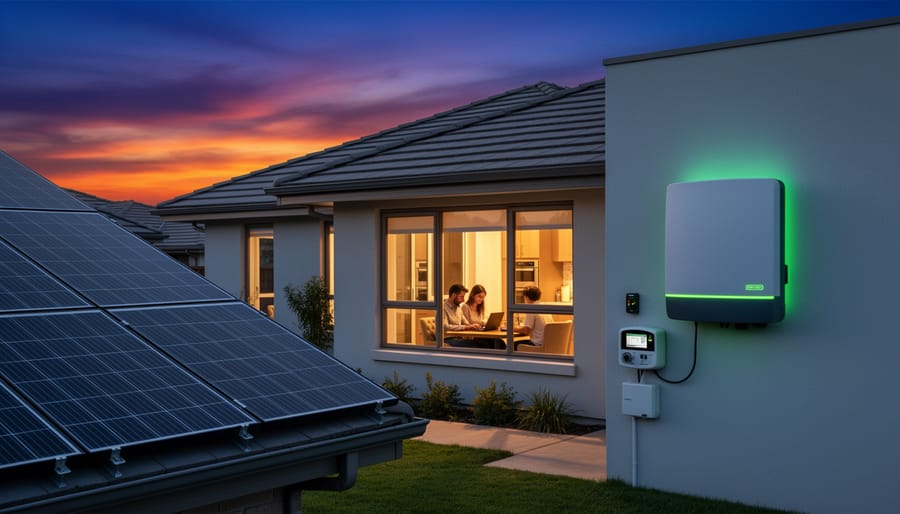
Adding a battery turns a solar charging station from a daytime-only asset into one that can serve drivers around the clock. Panels often produce the most power at midday, when few people are parked. Storage captures that surplus and releases it in the evening, so a vehicle can still charge on solar energy long after sunset.
Batteries also smooth out demand. When several vehicles plug in at once, the stored energy covers the spike, which reduces strain on the local grid and can lower peak-demand costs for site owners. During an outage, a storage-equipped station can keep chargers running, which makes it useful for fleets, emergency services, and communities that depend on reliable mobility. The trade-off is higher upfront cost and added system complexity.
Off-Grid and Standalone Units
Off-grid and standalone units are built to work without a utility connection at all. Solar panels, a battery bank, and one or more chargers sit together in a single self-contained package, so the station makes and stores its own power on site. Some arrive as ground-mounted kiosks, others as portable trailers that can be towed to a location and set up in hours, and many take the form of canopy-style structures that double as shaded parking.
Their real value shows up where running a grid line would be slow or expensive. Remote trailheads, rural roadsides, construction sites, farms, and island communities are natural fits, as are temporary events and emergency response, where a quick, independent charging point can be a real advantage.
The trade-off is capacity. Because every kilowatt-hour must come from the panels and battery, these units are sized around expected demand, so they typically suit modest, predictable charging needs rather than high-traffic sites.
Where Solar EV Charging Is Put to Work
Solar charging has moved well beyond the demonstration pilot. Today it shows up wherever vehicles sit still long enough to soak up clean power, and wherever a canopy can double as shade. From the US and Europe to fast-growing markets across Asia and the Pacific, the same idea adapts to very different settings:
- Parking lot carports: Panels overhead create shade for parked cars while generating power on land that is already paved.
- Workplaces and campuses: Cars are parked through daylight hours, so charging lines up neatly with peak solar output.
- Highway and rest-stop corridors: Sites far from dense grid infrastructure can lean on on-site generation to support longer journeys.
- Fleet depots: Predictable schedules let operators plan charging around solar production and lower energy costs.
- Residential garages and home systems: Rooftop panels can supply the household and the family car from the same source.
- Community and remote areas: Standalone units bring charging to places where a grid connection is difficult or costly.
What makes these applications increasingly practical is steady innovation in how the pieces work together. Integrated canopies now combine structure, panels, lighting, and charging points into a single design, which simplifies installation and makes better use of limited space. Smart load management spreads available power across several vehicles, so a site does not need oversized equipment to serve everyone fairly.
Bidirectional charging adds another layer. In a compatible setup, a parked vehicle can send stored energy back to a home or building, helping smooth demand or keep essentials running during an outage. That turns the car from a simple consumer of electricity into a flexible part of the energy system.
Regional conditions shape the details. A sun-rich coastal city, a northern European campus, and an island community will each choose different configurations. The common thread is that solar charging fits best where generation and parking time overlap, and technology keeps widening the places where that happens.
What to Weigh Before Considering a Solar Charging Station
Start with the site itself. Solar output depends on how much unshaded roof, canopy, or ground space you have and which way it faces. A shaded driveway or a small north-facing roof will limit what panels can produce, so a careful sun-exposure assessment comes before anything else.
Next, look at how you actually drive and charge. A commuter who plugs in overnight has a very different profile from a workplace where cars charge at midday, when solar generation peaks. Matching charging times to sunny hours means less reliance on stored energy or the grid, while evening-heavy habits may call for batteries or a grid connection to fill the gap.
Grid interconnection and permitting deserve early attention. Connecting panels and chargers to the grid usually involves utility approval, electrical inspections, and local building rules, and the process varies widely from one jurisdiction to the next. Starting these conversations early can save time later.
Incentives are another regional variable. Tax credits, rebates, net metering policies, and charger-specific programs differ across the US, Europe, Asia, and the Pacific, and they change over time. It pays to check what’s currently available where you live rather than assuming.
Storage adds flexibility, since batteries let you charge after dark and soften demand peaks. They also add cost and complexity, so the question is whether the resilience and timing benefits justify that for your situation.
Finally, plan for upkeep. Panels need occasional cleaning and inspection, and chargers, inverters, and batteries have their own service needs. A good installer can outline a realistic maintenance routine.
Because regulations, incentives, and site conditions are so local, talking with qualified installers and your local authorities is the most reliable way to turn a good idea into a system that fits.
Common Questions About Solar Powered EV Charging
Drivers searching this topic tend to ask the same handful of practical questions. Here are clear answers to the most common ones.
Can an EV charge directly from solar panels?
Yes, in the right setup. Panels produce DC power that an inverter or a DC-coupled charger can route to the vehicle, though most systems also draw on the grid or a battery to keep charging steady.
Does it work at night or on cloudy days?
Panels still generate some power under clouds, just less than in full sun. After dark, a station relies on stored energy from a battery or on the grid, which is why many sites pair solar with one or both.
Can a home solar system charge an EV?
Absolutely. A home array can feed a wall charger directly, and many owners schedule charging for sunny daytime hours to use more of their own generation.
Is a battery required?
No. Grid-tied stations work well without storage, while batteries add evening charging and resilience for those who want them.
Solar charging differs from standard charging mainly in where the electricity comes from. The charger and the vehicle behave the same way, but a solar-linked station sources part or all of its energy from sunlight, which can lower the carbon footprint of each charge and reduce reliance on grid power during peak periods.
The pairing also matters beyond a single driveway. Homeowners who want to power a Tesla from their own roof show how personal generation and personal transport can work together, while utility-scale projects are expanding the clean power available to grids that charge many vehicles at once.
Taken together, these small and large efforts support the wider transition. Every vehicle charged with solar-generated electricity helps connect clean generation to clean transport, and smarter energy management is making that link stronger year after year.
Solar powered EV charging stations bring two clean-energy stories together. One technology makes electricity from sunlight; the other turns that electricity into quiet, emissions-free miles. When they work side by side, energy is produced close to where it’s used, and a drive can be powered by something as simple as a sunny parking lot.
The momentum is real. Panels keep getting more efficient, batteries are becoming more capable and more affordable, and smart energy management is making it easier to match charging to available sunshine. Together, these advances point toward a future where solar charging is a familiar sight in cities, along highways, on remote islands, and in ordinary driveways across the US, Europe, Asia, and the Pacific.
If you’ve been curious, now is a great time to look closer. Consider how much sun your roof, carport, or lot receives, how and when you drive, and what local installers can offer. Whether for a home, a business, or a whole community, solar and electric vehicles may fit together more naturally than you’d expect.