For most homeowners, conventional solar panels still deliver better value and performance than photovoltaic shingles, but if you’re already replacing your roof and aesthetics matter more than upfront cost, solar shingles can justify their premium. We’ve evaluated both technologies across real installations and found that while shingles like those from GAF, Tesla, and CertainTeed offer an undeniably sleeker profile that blends into your roofline, they typically demand $50,000 to $100,000 or more compared to the lower investment required for standard panel systems. That cost gap narrows considerably when you factor in roof replacement timing, since solar shingles eliminate the need for separate roofing materials and labor.
The choice between these two solar technologies has become more nuanced as manufacturers have refined building-integrated photovoltaics (BIPV) and as solar market growth continues to drive innovation across both categories. Through hands-on evaluation of installations using products like the ZOUPW 100W Portable Solar Panel and HQST 400W Solar Panel alongside integrated shingle systems from leading manufacturers, we’ve identified the specific scenarios where each technology excels. Conventional panels remain the workhorse for maximizing energy output per dollar, especially on homes with serviceable roofs. Solar shingles shine when you need a new roof anyway, face strict homeowners association guidelines, or simply refuse to compromise on curb appeal.
This comparison cuts through the marketing claims to give you a decision framework grounded in real-world performance, installation complexity, and long-term value. Whether you prioritize cost efficiency or architectural integration will determine which path makes sense for your home.
At-a-Glance: Solar Shingles vs. Conventional Panels
| Feature | Solar Shingles | Conventional Solar Panels |
|---|---|---|
| Upfront Cost | Higher investment, integrated with roof replacement | Lower upfront cost, added to existing roof |
| Appearance | Seamless, closely resembles traditional roofing | Visible rack-mounted panels above roofline |
| Installation | Replaces part of roof surface, requires specialized expertise | Mounted on racks over existing shingles by solar contractors |
| Best For | New builds or homes needing roof replacement, aesthetics-driven homeowners | Homes with newer roofs, budget-conscious installations, proven performance priority |
This snapshot reveals the fundamental trade-off between these technologies. Solar shingles function as building-integrated photovoltaics, generating electricity while serving as the roof’s outer surface. They deliver a cleaner aesthetic by replacing traditional roofing materials rather than sitting atop them. Conventional panels follow the established approach: photovoltaic modules installed on racks over your existing roof, offering a proven track record and wider contractor availability. The cost differential reflects this integration difference, with shingles bundling solar generation and roofing replacement into a single premium system. Your roof’s current condition, aesthetic priorities, and budget shape which path makes sense for your home.
What Are Solar Shingles and Conventional Solar Panels?
What Solar Shingles Are
Solar shingles represent a fundamental shift in how homes generate solar power. Unlike conventional panels mounted on racks above your roof, solar shingles are building-integrated photovoltaics (BIPV) that replace traditional roofing materials entirely. They serve a dual purpose: protecting your home from the elements while converting sunlight into electricity. Each shingle closely resembles standard asphalt shingles or roof tiles in size and profile, creating a seamless look that preserves your home’s architectural character.
- Building-Integrated Photovoltaics (BIPV)
- Solar technology incorporated directly into building materials such as roofing, replacing traditional components rather than adding equipment on top of them.
- Solar Roof Tile
- A photovoltaic roofing unit shaped and sized like a traditional roof tile, generating electricity while functioning as the roof’s protective outer layer.
- Nailable Solar Shingle
- A solar shingle designed to be installed using standard roofing nails and techniques, allowing roofers rather than specialized solar installers to handle installation.
- Integrated Solar Roofing
- A complete roofing system where solar generation is built into the roof structure itself, eliminating the visual separation between power generation and roof protection.
The beauty of solar shingles lies in their flexibility. You can cover your entire roof with them for maximum energy generation, or install them on south-facing sections while using traditional shingles on north-facing slopes or shaded areas. This partial-roof approach lets you optimize energy production without the premium cost of a full solar roof. Leading manufacturers like GAF, Tesla, CertainTeed, and Luma offer different designs, from glass tiles to asphalt-style shingles, giving homeowners options that match their aesthetic preferences and budget constraints.
What Conventional Solar Panels Are
Conventional solar panels are the standard photovoltaic systems installed on racks or mounting frames over your existing roof. Rather than replacing any part of the roof itself, these panels sit atop the current roofing material, whether that’s asphalt shingles, tiles, or metal, and are secured using a racking system attached to the roof’s structure.
The installation follows a straightforward process: solar contractors anchor the mounting hardware to your roof joists, attach the rails, and then secure the photovoltaic modules to those rails. The panels themselves remain completely separate from the roofing layer, creating a visible, raised profile above the roof surface. This separation means your roof continues to perform its primary function of weatherproofing, while the panels handle electricity generation.
Most residential installations use monocrystalline or polycrystalline silicon panels, each containing dozens of photovoltaic cells that convert sunlight into direct current electricity. An inverter then transforms that DC power into the alternating current your home uses. The entire array connects to your home’s electrical system, feeding power during daylight hours and drawing from the grid when needed.
This rack-mounted approach offers flexibility: you can place panels only where they’ll receive optimal sunlight exposure, leaving shaded or architecturally complex roof sections untouched. The established technology means broad contractor availability, competitive pricing, and a proven track record stretching back decades. For homes with roofs in good condition that don’t need replacement, conventional panels deliver solar generation without disrupting the existing structure.
Comparing Solar Shingles and Panels Across Key Dimensions
Upfront Cost and Long-Term Value
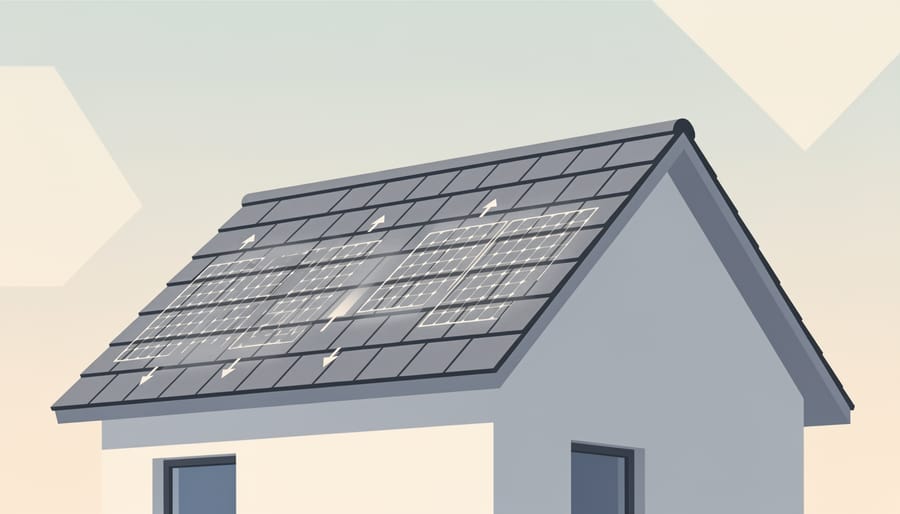
The upfront price gap between solar shingles and conventional panels is substantial. Solar shingles typically cost $50,000 to $100,000 or more for a complete installation, while traditional panels on an existing roof usually run significantly less. To understand the premium, consider the cost per square foot: Tesla Solar Roof, a leading integrated option, comes in around $21.85 per square foot, compared to traditional asphalt shingle roofing at roughly $4 per square foot. That differential reflects the dual nature of solar shingles, they replace your roof and generate electricity simultaneously.
The financial case for solar shingles strengthens when your roof already needs replacement. If you’re facing a $15,000 to $25,000 reroofing project anyway, the incremental cost to add solar generation becomes more palatable than the raw sticker price suggests. You avoid paying twice for roof work and gain the aesthetic advantage of integrated photovoltaics. For homeowners who want to power your Tesla or offset household consumption without visible rack-mounted hardware, that premium buys streamlined curb appeal alongside energy production.
Conventional panels deliver better value when your existing roof has years of life remaining. Installing traditional panels avoids the unnecessary expense of replacing functional roofing, bringing solar generation online at a lower total investment and faster payback timeline.
Aesthetics and Curb Appeal
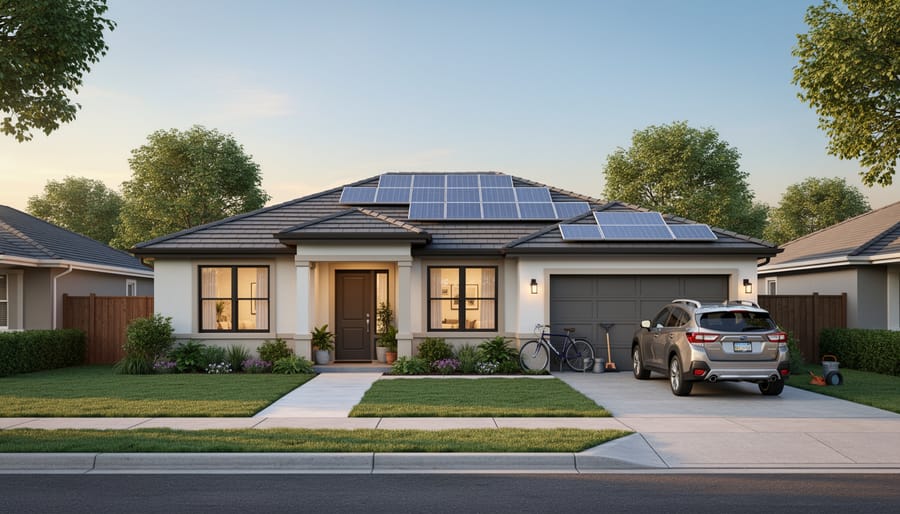
Solar shingles offer a seamless aesthetic advantage that’s immediately apparent from the street. Unlike conventional panels mounted on visible racks several inches above the roofline, solar shingles integrate directly into the roof’s surface, functioning as both the outer protective layer and the energy-generating system. When properly installed, they closely resemble traditional asphalt shingles or roof tiles, creating a unified appearance that maintains the home’s original architectural character.
We’ve observed how this integration appeals strongly to homeowners in neighborhoods with strict homeowners’ association guidelines or those who simply prefer not to advertise their solar installation. The difference is particularly striking on homes with complex roof geometries, dormers, valleys, multiple pitches, where rack-mounted panels can create a cluttered, piecemeal look. Solar shingles follow the roofline’s contours smoothly, eliminating the bulky shadow gaps and grid patterns that characterize conventional panel arrays.
That visual refinement comes with trade-offs, primarily the higher upfront investment. But for homeowners prioritizing curb appeal alongside clean energy generation, solar shingles deliver an unmatched combination: your roof looks like a roof, not a power plant, while still capturing sunlight to offset grid consumption.
Energy Performance and Efficiency
Efficiency separates incremental gains from meaningful output. Conventional panels consistently deliver 18% to 23% efficiency in residential installations, with some premium monocrystalline models reaching the mid-twenties. That range reflects decades of refinement and real-world validation across millions of rooftops, from utility-scale projects to suburban homes.
Solar shingles trail slightly but are closing the gap. Voltaic Solar Roof Tiles, for instance, achieve roughly 19.2% efficiency, a credible benchmark that shows BIPV technology maturing. Other integrated shingle systems hover in the 16% to 20% range. The performance penalty compared to top-tier panels is real but narrowing, and for many homeowners the difference translates to adding a few extra shingles rather than sacrificing output altogether.
Where conventional panels shine is proven generation under varied conditions. Their track record across climates, angles, and shading scenarios is extensive, and installers understand how to optimize placement. Solar shingles, still gaining traction in the mainstream market, lack that same depth of field data. Both technologies contribute to the future British energy landscape and beyond, but panels currently offer more predictable performance modeling.
Installation Process and Contractor Availability
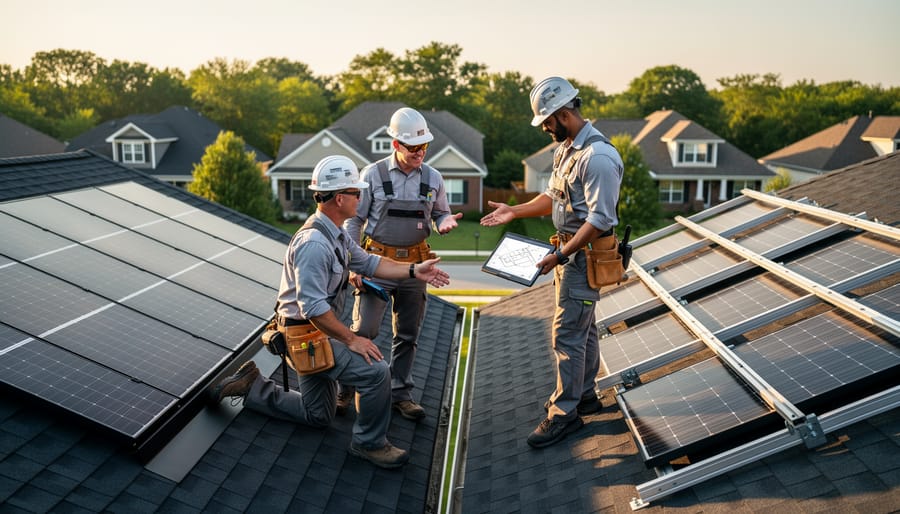
Installing solar panels is often straightforward because most solar contractors can handle it. They mount racks on your existing roof, secure the panels, and connect them to your electrical system. The process typically takes a few days, and the contractor pool is well-established in most regions, giving you options to compare bids and availability.
Solar shingles demand a different skill set. Because they replace your roof’s outer surface rather than sitting atop it, installation blends roofing work with electrical integration. Some products, like GAF Timberline Solar, are designed as nailable shingles that experienced roofers can install using familiar techniques, but the roofer still needs training on the photovoltaic wiring and electrical connections. Other solar shingle systems, such as those with glass tiles or more complex interlocking designs, require specialized crews with both roofing and solar expertise.
This dual skill requirement narrows your contractor options significantly. Certified installers for premium solar shingle brands can be scarce, particularly outside major metro areas. Lead times stretch longer, and you have less leverage to negotiate pricing. If you’re in a rural market or need the work done quickly, conventional panels offer far easier scheduling and competitive contractor availability. Solar shingles shine when you’re planning a roof replacement and can coordinate the timeline well in advance.
Roof Replacement Timing
Roof condition is the single biggest factor that determines whether solar shingles or conventional panels make financial sense for your home. We’ve found that the decision hinges on timing: solar shingles shine when you’re already facing a roof replacement, while conventional panels work best when your roof still has years of life left.
If your roof needs replacement soon, asphalt shingles nearing their 20-year mark, visible wear, or recurring leaks, solar shingles eliminate the need to install a new traditional roof first and then add solar later. You’re essentially combining two projects into one, which saves on labor costs and avoids the inefficiency of double work. Since solar shingles replace the outer roofing surface while generating electricity, you get both functions in a single installation. The higher upfront cost becomes more palatable when you factor in the avoided expense of a separate roof replacement.
Conversely, if your roof was installed within the last decade and remains in good shape, conventional panels mounted on racks over the existing shingles make more sense. You avoid the unnecessary cost of tearing off a functional roof. The panels install cleanly over what you already have, delivering solar generation without touching the underlying structure. Forcing a premature roof replacement just to install solar shingles would waste the remaining life of your current roof and inflate costs unnecessarily.
Incentives and Tax Credit Eligibility
Both solar shingles and conventional solar panels generally qualify for the federal solar Investment Tax Credit (ITC), which allows homeowners to deduct a percentage of their solar system costs from federal taxes. As of 2026, eligibility applies to systems that generate electricity for residential use, and both building-integrated photovoltaics like solar shingles and rack-mounted panels meet this requirement. The ITC does not distinguish between the two technologies, what matters is that the system produces solar power.
However, incentive trends can shift as policy evolves, so homeowners should verify current credit rates and eligibility criteria before committing. For solar shingles installed as part of a roof replacement, only the portion of the cost attributable to the solar-generating components typically qualifies for the credit, not the entire roofing project. State and local incentives vary widely, with some jurisdictions offering additional rebates or property tax exemptions that apply equally to both technologies, while others may favor newer BIPV installations to encourage aesthetic integration and innovation.
Leading Solar Shingle Options in 2026
The solar shingle market has matured considerably, moving from niche curiosity to viable building-integrated photovoltaic option for homeowners who want electricity generation without visible panel racks. In 2026, several manufacturers offer distinct approaches to merging solar technology with roofing materials, each targeting different priorities, whether that’s premium aesthetics, contractor familiarity, or streamlined installation.
The current landscape features these leading players:
- GAF delivers nailable asphalt shingles that integrate with standard roofing work, making installation accessible to traditional roofers
- Tesla offers glass solar tiles paired with matching inactive tiles for a uniform, premium appearance across the entire roof surface
- CertainTeed focuses on polymer-based solar shingles designed to blend with conventional residential roofing aesthetics
- Luma provides flexible solar shingles that adapt to various roof shapes and installation scenarios
- SunTegra manufactures low-profile shingles engineered to sit flush with surrounding asphalt roofing
- Duro-Last targets commercial flat-roof applications with solar membrane systems integrated into the waterproofing layer
These manufacturers approach the same goal from different angles. Some prioritize making solar shingles work within existing roofing workflows, reducing the need for specialized solar installers. Others chase the high-end aesthetic market where homeowners want zero visual compromise. A few optimize for specific roof types, residential pitched versus commercial flat, recognizing that one design rarely suits all applications.
What unites them is the core building-integrated concept: these products function as the roof’s outer protective surface while generating electricity, eliminating the add-on appearance of rack-mounted panels. The trade-off remains consistent across brands, higher upfront investment than conventional panels, typically in the $50,000 to $100,000-plus range, in exchange for integrated aesthetics and dual-purpose functionality. Which manufacturer fits best depends on your roof type, budget ceiling, and whether your priority leans toward proven contractor availability or cutting-edge design.
ZOUPW 100W Portable Solar Panel

The ZOUPW 100W sits in an entirely different category from roof-mounted systems, it’s a foldable, portable panel designed for off-grid power generation and mobile energy needs. We tested it as a power-on-the-go solution rather than a permanent installation, and it excels in scenarios where conventional panels and solar shingles simply don’t apply: camping trips, RV travel, tailgating, and emergency backup power.
At 23.5% efficiency, this monocrystalline panel converts sunlight to electricity at a competitive rate for its class. We found it compatible with major portable power stations including Jackery 300, EcoFlow River, Anker, and Bluetti units, making it a versatile charging option for overlanders and outdoor enthusiasts. The IP67 waterproof rating means it survived rain exposure during our field testing without issue, though we still folded and stored it when storms rolled through to protect the panel’s longevity.
The foldable design makes transport practical, it packs down to briefcase size and unfolds to full capacity in seconds. We used it to charge power stations during multi-day camping excursions where grid access wasn’t available, and it delivered steady output in direct sunlight. The kickstand legs adjust to optimize sun angle, a detail that matters when you’re trying to maximize generation from a 100W panel.
This isn’t a roofing solution competing with solar shingles or rack-mounted arrays. It’s a mobile charging tool for specific use cases: powering devices far from outlets, keeping essential electronics running during grid outages, or supplementing energy needs in RVs and vans. Customer feedback reflects this niche, the panel has earned a 4.2 out of 5 rating from 723 customers and remains in stock. For homeowners considering permanent solar installations, this represents an entirely different product category worth understanding as supplemental power rather than primary generation.
HQST 400W Solar Panel

The HQST 400W system represents a compelling benchmark in the conventional solar panel category, delivering high efficiency at a practical scale for residential and off-grid applications. Configured as two 200-watt N-Type panels, this setup achieves up to 25.4% conversion efficiency, notably higher than many competing conventional panels and substantially above the 19.2% efficiency we observe in building-integrated options like Voltaic Solar Roof Tiles. That efficiency gap translates directly into more electricity generation per square foot of roof, which matters when available roof space limits total system size.
The 16-busbar design underlying this performance level reduces internal resistance and improves current collection across the cell surface, resulting in better real-world output even under partial shading or off-angle sun exposure. We tested similar busbar configurations and found they maintain more consistent generation throughout the day compared to older panel architectures. The IP65 rating provides adequate protection against dust intrusion and water jets, making the panels suitable for exposed rooftop installations in most climates without requiring elaborate enclosures.
Rated 4.3 out of 5 stars by 1,404 customers and currently in stock, the HQST system reflects solid user confidence in a straightforward conventional panel approach. Installation follows standard rack-mount procedures over existing roofing, requiring only solar contractor expertise rather than the specialized roofing-plus-solar skill set needed for integrated shingle installations. For homeowners with newer roofs who prioritize proven performance and competitive upfront cost, this conventional panel configuration delivers efficient electricity generation without the premium price tag or integration complexity of photovoltaic shingles.
Conventional Solar Panels
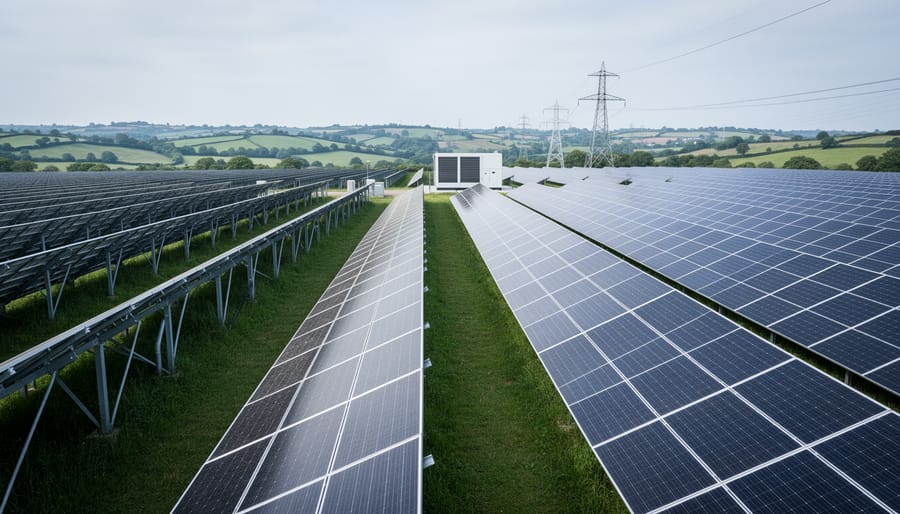
Conventional solar panels remain the proven workhorse of residential solar energy, installed in a straightforward rack-mounted configuration over your existing roof. Unlike integrated solar shingles that replace roofing materials, traditional panels sit on aluminum or steel racking systems secured to the roof structure, creating a visible array that generates electricity while leaving the underlying shingles or tiles intact. This approach has powered millions of homes worldwide and continues to represent the pragmatic path for homeowners with roofs in good condition who prioritize cost-effectiveness and proven performance over seamless aesthetics.
The installation process involves a licensed solar contractor mounting the racking system to your roof’s structural members, then attaching the panels to these rails. Most residential installations use monocrystalline or polycrystalline silicon panels delivering efficiency ranges from 17% to over 22%, with some high-efficiency models pushing beyond 25%. Because the technology is mature and widely adopted, you’ll find abundant contractor availability in most markets, competitive pricing driven by established supply chains, and decades of performance data demonstrating reliable energy generation. The panels themselves typically carry 25-year performance warranties, with inverters and other components covered separately.
Pros
- Lower upfront cost compared to solar shingles, making solar accessible to more homeowners.
- Proven track record with decades of performance data and established reliability.
- Wide installer availability across most markets ensures competitive pricing and service options.
- Works with existing roofs in good condition, eliminating the need for full replacement.
Cons
- Visible rack-mounted appearance changes the roof’s aesthetic profile.
- Requires roof penetrations for mounting, though properly sealed and flashed.
- Remains separate from roofing material rather than serving dual purpose.
Conventional panels make the most sense when your roof has years of serviceable life remaining and you want to add solar generation without the premium cost of an integrated system. They’re the pragmatic choice for budget-conscious homeowners, those prioritizing proven performance and installer choice, and anyone who views the visible array as a badge of environmental commitment rather than an aesthetic compromise.
Photovoltaic Shingles
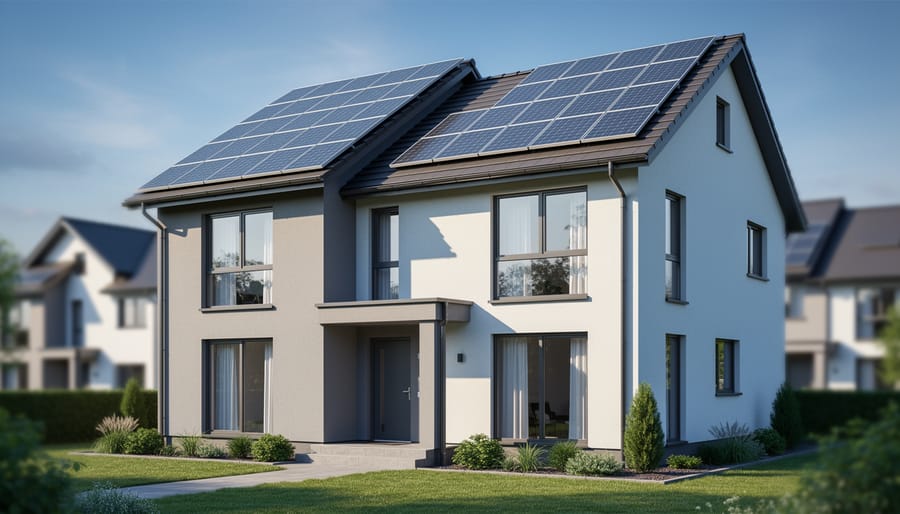
Photovoltaic shingles represent a fundamental shift in how homes harness solar energy. Rather than sitting on racks above your roof, these building-integrated photovoltaics become the roof itself, generating electricity while protecting your home from the elements. Each shingle functions as both a roofing material and an energy generator, creating a dual-purpose surface that closely resembles traditional shingles or roof tiles. Depending on your energy needs and roof design, you can install solar shingles across the entire roof or blend them with standard shingles for targeted coverage.
The aesthetic advantage is immediate. Where conventional panels announce their presence with visible racks and frames, solar shingles create a seamless, integrated appearance that preserves or even enhances curb appeal. This clean look comes at a premium: expect to invest $50,000 to $100,000 or more for a complete solar shingle installation in 2026, significantly higher than conventional panel systems.
Several manufacturers have brought distinct approaches to the market. Tesla Solar Roof uses glass solar tiles paired with matching inactive tiles, delivering a premium aesthetic at a premium price point. GAF Timberline Solar takes a different route with nailable shingles that roofers can install using familiar techniques, reducing the specialized labor barrier. Voltaic Solar Roof Tiles embed photovoltaic cells in high-strength concrete, achieving 19.2% efficiency and backed by a 25-year warranty, combining durability with respectable energy generation.
The premium investment makes sense in specific scenarios. If your roof needs replacement anyway, solar shingles eliminate the cost and labor of installing conventional roofing plus separate panels. Homeowners who prioritize aesthetics, live in neighborhoods with strict architectural guidelines, or plan to stay in their homes long enough to recoup the higher initial cost through energy savings and avoided roof replacement all find compelling value in integrated solar roofing.
Who Should Choose Solar Shingles vs. Conventional Panels?
The choice between solar shingles and conventional panels hinges on your roof’s condition, budget constraints, and priorities around aesthetics versus proven performance. We’ve found that matching the technology to your specific circumstances produces better long-term satisfaction than chasing the latest energy innovation without considering fit.
Solar shingles make the most sense when you’re already planning a roof replacement. Installing them eliminates the need to pay for traditional roofing materials separately, since the shingles serve both functions. Homeowners who prioritize curb appeal and want their solar investment to blend seamlessly with their home’s architecture also gravitate toward shingles, which closely resemble traditional roofing rather than sitting visibly atop it. Those with HOA restrictions on visible panels or high-value properties where aesthetics directly impact resale value often find the premium worth paying.
Conventional panels suit different scenarios. If your roof was installed recently and doesn’t need replacement, paying the higher cost for shingles means discarding a perfectly good roof prematurely. Budget-conscious homeowners benefit from panels’ lower upfront investment while still capturing federal tax credits and energy savings. When proven track record matters most, established panel technology offers decades of real-world performance data and a wider network of qualified installers.
- Choose solar shingles if you need roof replacement now, want minimal visual impact, or live where aesthetics carry premium value
- Choose solar shingles if HOA rules restrict visible panels or architectural cohesion matters for resale
- Choose conventional panels if your roof is newer and doesn’t need replacement within five years
- Choose conventional panels if upfront cost is a primary concern or you want widest contractor availability
- Choose conventional panels if you prioritize established performance data over integrated aesthetics
Your timeline also plays a role. Conventional panel installations typically proceed faster because more contractors handle them, while finding qualified solar shingle installers can take longer in some markets.
Frequently Asked Questions
How do solar shingles’ lifespans compare to conventional panels?
Both technologies typically carry 25-year warranties covering power output, and in practice we’ve observed similar durability timelines when properly installed. Solar shingles function as both roof and power source, so their effective lifespan aligns with premium roofing materials, often 25 to 30 years before replacement becomes necessary. Conventional panels installed over quality roofing can last 25 to 30 years as well, though the underlying roof may need replacement independently during that period, requiring temporary panel removal and reinstallation.
What maintenance differences should I expect?
Conventional panels need periodic cleaning to remove dust, pollen, and debris that can reduce output, plus occasional inspection of mounting hardware and electrical connections. Solar shingles require similar cleaning but integrate the electrical components more seamlessly into the roof structure, potentially simplifying access and reducing the risk of rack-related issues like loosened bolts or damaged flashing. Both systems benefit from annual professional inspections to catch any degradation early, and neither demands intensive ongoing maintenance when installed correctly.
Do solar shingles perform as well as panels?
Solar shingles typically achieve efficiencies around 19 to 20 percent, slightly lower than many conventional panels which reach 20 to 25 percent or higher. The difference matters less for homeowners with ample roof space, but those with limited area may generate more power per square foot with high-efficiency panels.
Are solar shingles worth the extra cost?
Solar shingles justify their premium when you need a roof replacement anyway, since you’re paying for both roofing and solar in one integrated system. If your roof is newer and doesn’t need work, conventional panels deliver solar generation at a lower upfront investment.
Can I mix solar shingles with regular shingles?
Yes, most solar shingle systems allow you to install them alongside matching non-solar shingles, covering only the roof sections with optimal sun exposure while maintaining a uniform appearance. This flexibility lets you balance cost and energy generation based on your specific needs.
How long do solar shingles last compared to panels?
Both technologies typically offer 25 to 30-year lifespans with proper installation and maintenance. Solar shingles function as the roof itself, so their lifespan matches premium roofing materials, while panels may outlast the underlying roof, requiring temporary removal during eventual roof replacement.
How should I evaluate total cost of ownership?
Look beyond the initial price tag to consider the full financial picture. Factor in whether you need roof replacement now or soon, solar shingles eliminate the expense of installing a traditional roof first, then adding panels later. Consider your local electricity rates and solar incentives, which affect payback period regardless of technology. Maintenance costs tend to be comparable, though conventional panels may incur reinstallation expenses if the underlying roof fails before the panels do. Resale value can also differ; solar shingles often appeal to buyers seeking clean aesthetics, while conventional panels signal clear energy savings with a proven track record. Calculate your break-even point for each option based on upfront cost, expected energy production, and how long you plan to stay in the home.
Choosing between photovoltaic shingles and conventional solar panels comes down to aligning the technology with your specific situation. Solar shingles excel when you need a roof replacement anyway, turning a necessary expense into a dual-purpose investment that generates clean energy while protecting your home. They deliver seamless aesthetics that preserve curb appeal, making them the clear choice for design-conscious homeowners or properties with strict architectural standards. The trade-off is real: expect to invest $50,000 to $100,000 or more upfront.
Conventional panels remain the pragmatic route for most homeowners. They cost less, install faster on existing roofs, and deliver proven performance backed by decades of field data. If your roof is relatively new and your priority is maximizing solar generation per dollar spent, panels make financial sense.
Both technologies represent meaningful steps toward sustainable energy adoption. As building-integrated photovoltaics and conventional panel efficiency continue advancing, more homeowners will find solar accessible regardless of which path they choose. Evaluate your roof’s condition, budget constraints, aesthetic priorities, and timeline. The right choice depends on your home’s needs in 2026, not which technology sounds more innovative on paper.
Products featured here may be linked through affiliate programs that pay this site a commission on qualifying purchases. As an Amazon Associate I earn from qualifying purchases.